

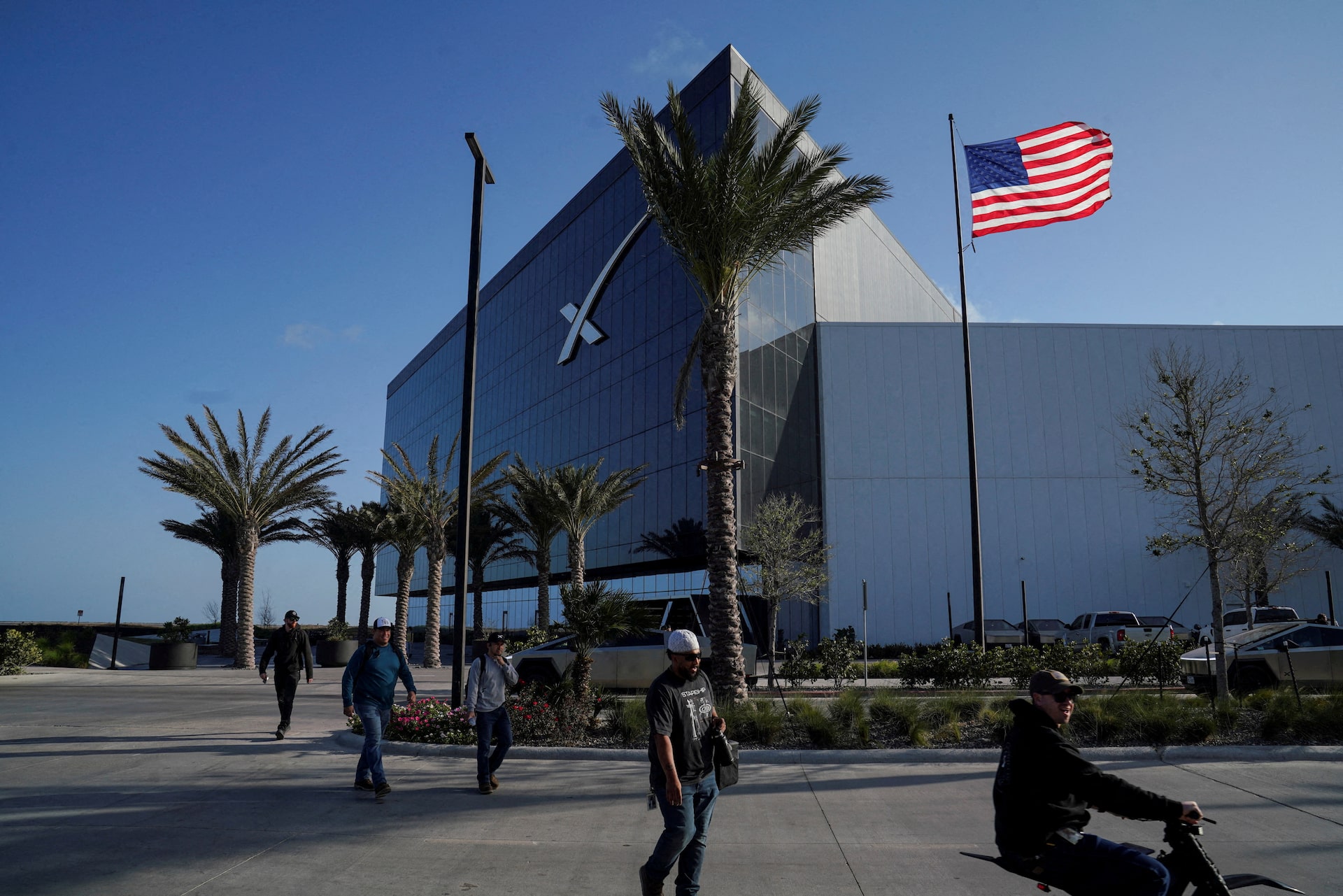
SpaceX has confidentially filed for an initial public offering with the Securities and Exchange Commission, putting the company on track for a June listing that could value the company at over 1.75 trillion dollars. The proposed valuation would make it the largest public offering in history, eclipsing all previous IPOs by a substantial margin. Twenty-one banks have reportedly signed on as bookrunners including Morgan Stanley, Goldman Sachs, and JPMorgan Chase, creating an underwriting syndicate of unprecedented scale for a private company going public.
The listing would make Elon Musk the first person to lead two trillion-dollar public companies simultaneously, adding SpaceX to Tesla, which already carries a market capitalization in the trillion-dollar range. The extraordinary valuation reflects both SpaceX's accomplishments in rocket reusability and satellite deployment and the transformative potential investors see in its long-term roadmap.
The confidential filing process allows companies to submit registration documents to the SEC for review before public disclosure, enabling preparatory work to proceed without market scrutiny. SpaceX has used this process appropriately given the sensitivity of financial and operational details involved in taking such a large company public.
The June timeline remains contingent on market conditions and the SEC review process, but the company appears committed to proceeding with the offering despite volatile market conditions. The alignment of major banking relationships and the retail investor access discussed previously suggest substantial preparation has occurred.
Valuation Context
The 1.75 trillion dollar valuation represents a substantial premium to SpaceX's most recent private funding rounds, which had valued the company at approximately 350 billion dollars. The multiple reflects both growth in the Starlink satellite business and the dramatically improved market conditions for space-related equities.
Starlink has emerged as a major revenue driver, with the satellite constellation now serving customers across multiple continents. The business model has evolved from initial consumer offerings to enterprise contracts and government services that provide more predictable revenue streams.
The valuation also incorporates expectations for Starship development and its potential to transform both satellite deployment and point-to-point transportation. The rocket's fully reusable design could dramatically reduce launch costs, enabling new applications previously uneconomical.
SpaceX has achieved profitability in recent periods, according to sources familiar with the company's financials. The combination of growth and emerging profitability distinguishes SpaceX from many high-profile IPO candidates that have required sustained subsidies.
Banking Syndicate Structure
The twenty-one bank syndicate represents an extraordinary concentration of Wall Street relationships and capabilities. Morgan Stanley leads the group, bringing its historic position as the premier technology IPO bank and extensive relationships with institutional investors globally.
Goldman Sachs provides additional investment banking firepower alongside its strong commodities and trading franchises. The firm's technology banking team has led numerous transformative listings.
JPMorgan Chase rounds out the lead bookrunners with its global reach and substantial balance sheet for managing large transactions. The bank's relationships across consumer and institutional segments provide distribution advantages.
The syndicate structure allocates economic benefits and visibility across multiple institutions, creating incentives for broad-based selling support when the shares begin trading. The cooperation of major banks signals confidence in the offering's success.
The allocation of bookrunner positions reflects relationship intensity and capital market capabilities that each bank brings to the transaction. These positions carry prestige and economic value that extends beyond the specific transaction.
Retail Investor Access
The commitment to retail investor participation represents a notable departure from typical large IPO structures. Previous offerings at this scale have typically allocated majority of shares to institutional investors with limited retail access.
Musk's explicit statement ensuring retail broker participation addresses concerns that ordinary investors would be excluded from the offering. Robinhood, SoFi, and other platforms would provide access that was unavailable for previous mega-IPOs like Saudi Aramco.
Retail participation creates broader ownership and public engagement that benefits the company politically and socially. The democratic ownership model represents a strategic choice as well as a reflection of values.
The combination of retail access and massive institutional demand creates unusual dynamics for allocation decisions. The syndicate must balance relationship obligations against retail access commitments.
Elon Musk's Dual Leadership
The IPO would establish Musk as the leader of two trillion-dollar public companies simultaneously. Tesla's market capitalization has fluctuated but remains among the most valuable automotive companies despite competition and execution challenges.
The dual leadership creates unique governance considerations. Musk's time and attention have already been divided across multiple ventures, and public market investors will scrutinize allocation of his focus.
Tesla shareholders have periodically expressed concern about Musk's divided attention and the potential for conflicts of interest between his various companies. SpaceX's public status will intensify these concerns as shareholders in both companies seek assurance about resource allocation.
Musk's compensation arrangements at both companies involve equity stakes that would be affected by stock price performance. The alignment of incentives with public shareholders becomes more complex across multiple public companies.
Market Implications
The SpaceX listing will create a new benchmark for space-related valuations and potentially for technology listings more broadly. The scale of the offering and the company's strategic importance will attract massive investor attention.
Previous mega-IPOs including Alibaba and Facebook created lasting market impact as shares became important holdings for index funds and institutional portfolios. SpaceX's impact may exceed these precedents given the valuation and strategic significance.
The timing of the offering will test market receptivity to large technology listings during a period of elevated volatility. Market conditions that have supported other listings will be scrutinized for applicability to SpaceX.
The offering's success or challenges will influence decisions by other private companies considering public listings. SpaceX's reception will establish market standards for valuation and structure of future large offerings.
Strategic Significance
The IPO represents a milestone in SpaceX's evolution from startup to established infrastructure company. The transition to public ownership brings accountability to shareholders while creating currency for acquisitions and talent retention.
Public market scrutiny will require greater transparency about operations and financials that have been private. SpaceX has maintained considerable secrecy about detailed performance metrics and forward plans.
The capital raised in the IPO could fund additional Starship development, Starlink expansion, and potential new initiatives. Public equity provides flexible funding that can support long-term strategic investments.
The listing also provides liquidity for employees and early investors who have held equity through years of private company growth. The event represents both an ending and a beginning for SpaceX's corporate journey.
Competitive Landscape
SpaceX has established itself as the dominant commercial launch provider globally, with a backlog of missions that provides revenue visibility for years. The combination of Falcon and Starship vehicles addresses different market segments with capabilities unmatched by competitors.
Blue Origin, Rocket Lab, and other competitors continue developing capabilities that will eventually provide alternatives to SpaceX services. The IPO provides capital to maintain technological leadership while potential competitors catch up.
Starlink faces competition from Amazon's Project Kuiper and other satellite internet initiatives. Public capital will support the constellation expansion necessary to maintain market leadership as the market becomes more contested.
The space economy continues attracting attention from investors seeking exposure to the commercialization of space. SpaceX's listing provides the most direct access to this theme that markets have ever offered.
Historical Precedent
The largest IPO in history was Saudi Aramco's 2019 listing, which raised approximately 29 billion dollars at a valuation around 1.7 trillion dollars. SpaceX's proposed offering would surpass this milestone in total value raised and potentially in final valuation.
The Saudi Aramco IPO provided a model for managing massive offerings through strategic allocation and retail access programs. SpaceX appears to be following similar approaches while adapting to different market conditions.
Technology IPOs have ranged from modest listings to transformative offerings, but none have approached SpaceX's proposed scale. The company's unique combination of established cash flow and transformative potential creates a listing unlike any previous offering.
The June timeline assumes顺利通过监管审查 without significant delays or requests for extensive revisions. Companies with complex financials sometimes face extended review periods that push listing dates later than initially planned.