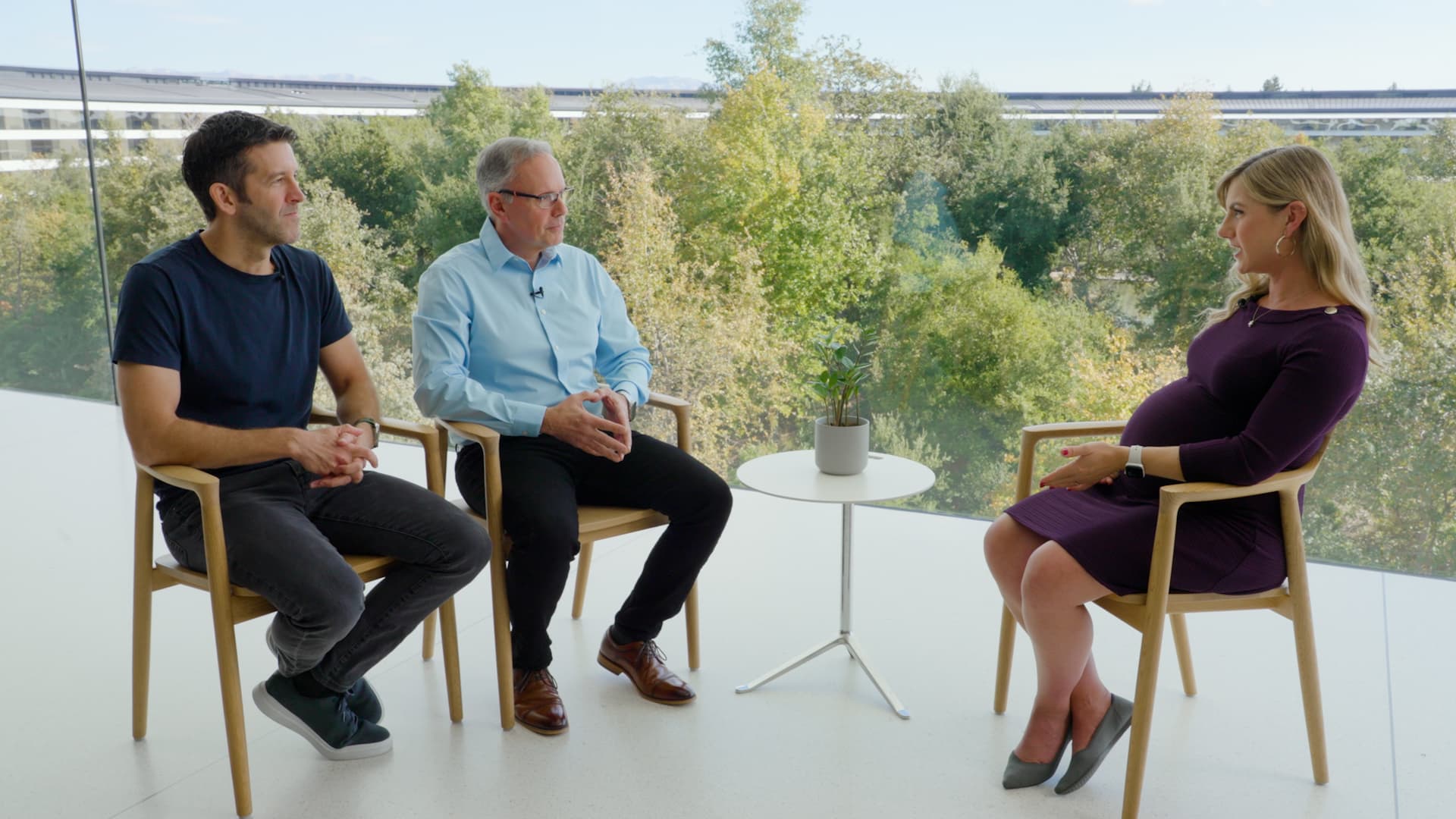
Apple has placed chip architect Johny Srouji in charge of its entire hardware apparatus, merging two organizations that had previously operated under separate senior vice presidents and consolidating them into five named divisions, all effective immediately. Apple confirmed the appointment on April 21, the same week the company formalized a broader leadership transition that will see John Ternus assume the chief executive's chair on September 1, 2026, with Tim Cook stepping aside to become executive chairman of Apple's board.
Srouji spent the past decade building Apple's custom silicon program from a skunkworks project into the most profitable chip franchise in consumer electronics. His new title, Chief Hardware Officer, reflects an expanded mandate that now covers everything from the A-series processors inside iPhones to the cellular modems that once came exclusively from Qualcomm, as well as the battery management controllers, display drivers, Face ID sensor arrays, and neural engines that Apple markets as the backbone of on-device artificial intelligence.
The organizational consolidation brings under one authority the groups responsible for the M-series chips that power MacBooks and Mac desktops, the C-series modem program that is progressively displacing Qualcomm at the radio layer, and the advanced technology teams developing sensing and camera hardware. Bloomberg first reported the structural details; Apple subsequently confirmed them through its official newsroom. The structural message embedded in the move is deliberate: Apple's next product era will be defined by silicon, and Srouji is now the person responsible for delivering it.
The Five-Division Blueprint
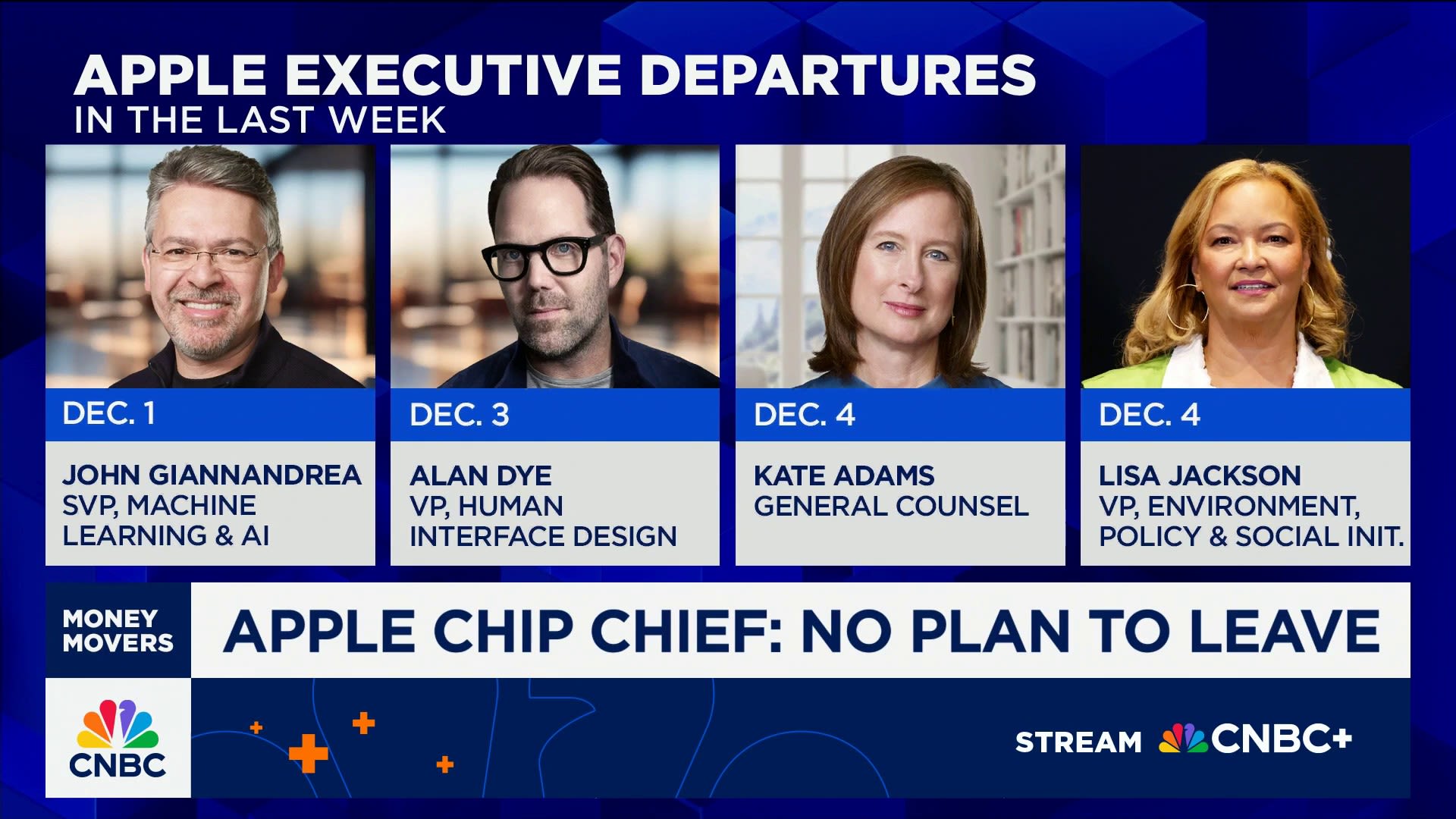
Srouji's reorganized hardware organization maps along five functional lines, each headed by a named executive, according to details Bloomberg reported and Apple confirmed.
Hardware Engineering, the product-facing team responsible for translating chip and component specifications into physical devices, passes from Ternus's oversight to Tom Marieb. Marieb's group handles industrial and mechanical engineering across the entire product catalog from iPhone to Vision Pro, coordinating with contract manufacturers through mass production ramps that span hundreds of millions of units annually.
Silicon, the franchise Srouji built personally over fifteen years, passes to Sri Santhanam. That organization designs the A-series, M-series, S-series, and W-series processors, as well as the C-series modem program and other semiconductors Apple is steadily pulling in-house from third-party suppliers. Santhanam becomes the functional custodian of Apple's most strategically important engineering asset.
Advanced Technologies, assigned to Zongjian Chen, covers sensing modules, camera systems, battery chemistry, and the hardware building blocks that eventually surface as headline features in finished products. This division sits upstream of product engineering: it develops the underlying science before a product team can deploy it.
Platform Architecture, led by Tim Millet, sets the long-range silicon roadmap. Millet articulated the division's philosophy in a widely cited CNBC interview, with a clarity that functions almost as a mission statement for the broader restructuring: "When we have control, we are able to do things beyond what we can do by buying a merchant silicon part." That principle drives the organizational logic Srouji has now formalized.
Project Management, run by Donny Nordhues, provides the operational spine: program schedules, cross-functional coordination, and the systems that prevent a silicon milestone from colliding with a manufacturing deadline. At Apple's production scale, that role is an exercise in applied industrial precision, one that determines whether a chip designed eighteen months in advance lands in stores on time.
The Modem Math
The financial stakes of Srouji's expanded mandate come into focus most sharply around cellular modems. Qualcomm supplied virtually every iPhone modem for fifteen years, collecting royalties and component margin on each device Apple shipped. Apple began its in-house modem program without public announcement, and in early 2025 the company debuted its first proprietary cellular chip, the C1, in a budget iPhone model. That controlled launch was designed to test the silicon without exposing flagship users to an unproven radio.
By September 2025, the C1X appeared in the iPhone 19, extending in-house modem coverage up the product hierarchy. According to reporting from Telecom Tech News on component sourcing data, the C1 and its successor are tracking to reduce Qualcomm's modem presence inside Apple's hardware lineup to roughly 20 percent of its previous volume by the end of 2026. The second-generation modem, internally codenamed Ganymede, is slated for the iPhone 18 family expected this autumn and for high-end iPads by 2027, according to Bloomberg's coverage of Apple's chip roadmap.
Bank of America, which issued an Underperform rating on Qualcomm in March 2026 with a price target of $145, estimates that Apple's modem transition will result in a $7 billion to $8 billion annual revenue loss for Qualcomm by late 2027. Qualcomm's stock has already shed 21 percent in 2026 year-to-date as investors price in that attrition.
For Apple, the arithmetic runs in the opposite direction. Retaining modem margin that previously flowed to Qualcomm improves gross margin per device, and integrated design gives Srouji's silicon team leverage that a merchant part cannot replicate: the C-series radio is designed to coordinate directly with the A-series neural engine and CPU, sharing memory bandwidth and power budget in ways that a chip engineered for multiple unrelated customers cannot accommodate. That integration advantage compounds across product generations.
Qualcomm's Narrowing Window
Qualcomm is not the only incumbent whose position has narrowed as Apple's silicon scope has widened. Intel supplied MacBook and iMac processors until Apple completed its M-series transition in late 2022, at which point Intel lost one of its most prestigious customer relationships and the annual volume that went with it. Broadcom supplies wireless connectivity chips, covering Wi-Fi, Bluetooth, and the ultra-wideband sensors Apple uses for spatial ranging in AirTag and select iPhone models, and Broadcom has been on notice that Apple is developing in-house replacements in that category as well.
The combined pattern, tracked by semiconductor analysts who monitor Apple's component sourcing, is one of systematic internalization. Apple targets each chip category where production volume and product differentiation justify the engineering investment, then executes a multi-year transition that is essentially irreversible once the in-house program matures. The process is not instantaneous: the M-series program took roughly six years from initial design work to the point where every Mac Apple sells runs its own silicon. But it proceeds without pause between generations.
For Qualcomm, the window to defend remaining Apple modem slots is closing. The company has committed to accelerating its Snapdragon X modem roadmap and has pitched Snapdragon 8 Elite modem performance to Apple's procurement team, but that argument becomes harder to sustain each quarter that Ganymede matures in Apple's labs. Bank of America's March 2026 downgrade cited the Apple modem transition as the single largest risk to Qualcomm's revenue trajectory through 2027, noting that the core handset division accounts for more than 70 percent of Qualcomm's chip revenue and that Apple, Samsung, and Xiaomi collectively represented roughly 54 percent of fiscal 2025 revenues.
For smaller suppliers in the Apple ecosystem, such as discrete display driver IC makers, power management IC vendors, and stand-alone sensor manufacturers, Srouji's reorganization signals continued pressure. Suppliers that cannot co-design tightly with Apple's silicon roadmap face the prospect of their discrete component being absorbed into a future Apple system-on-chip.
TSMC and the Supply Chain
One relationship that the restructuring does not threaten is Apple's partnership with TSMC. Apple is TSMC's largest customer and a principal driver behind the Taiwanese foundry's investment in 3-nanometer and 2-nanometer process nodes. Every chip Srouji's team designs flows through TSMC fabs, and as Apple's silicon footprint expands to cover categories previously sourced from merchant chipmakers, the total wafer volume flowing from Apple to TSMC grows proportionally.
SemiAnalysis has documented how Apple's multi-year process node commitments provide TSMC with the demand visibility required to justify billion-dollar investments in advanced lithography equipment. That dynamic deepens as Srouji gains authority over a larger share of Apple's total semiconductor spending. A Chief Hardware Officer who controls both the product engineering team and the silicon design team is positioned to make longer-range process node commitments than two separate SVPs negotiating internal roadmaps.
TSMC also benefits from the geopolitical alignment. Apple has backed TSMC's expansion into Arizona, where advanced packaging and test operations are ramping under the CHIPS Act framework. As U.S. export controls narrow the advanced-node options available to adversarial-market chipmakers and consolidate leading-edge volume into a shorter list of trusted partners, Apple's TSMC dependency transforms from a supply chain concentration risk into a strategic alignment with the dominant partner in Western-accessible advanced silicon.
Suppliers lower in the stack, covering precision optics, rare-earth magnets, and specialty coatings, are less directly exposed to Srouji's org chart. But the signal reaches them as well: Apple values vertical integration, and suppliers who cannot participate in closer design collaboration will find their negotiating position weaken across successive product cycles.
A Signal for the Ternus Era
The timing of Srouji's appointment, announced days before Apple confirmed the September 1 CEO handoff, reflects a transition architecture that Cook appears to have designed deliberately. Ternus built his reputation running the product engineering organization that took the M1 MacBook Air from concept to shelf in a single development cycle. His instincts are hardware-first, and the CEO succession reads as an institutional endorsement of that orientation.
By anchoring Srouji as the unified hardware and silicon chief before Ternus formally takes over, Cook ensures that the operational structure is running and tested before he steps back. The two-track model, a product-strategy CEO paired with a silicon-focused Chief Hardware Officer, eliminates the ambiguity that a traditional senior vice president structure can create when chip decisions, antenna decisions, and enclosure decisions are owned by three different organizations.
The AI dimension is explicit in Apple's own framing. Apple Intelligence, the on-device AI suite Apple launched with iOS 18, runs primarily on the Neural Engine integrated into Srouji's A-series chips rather than on remote cloud servers. That architecture is Apple's competitive differentiation against AI products from Google, Microsoft, and Samsung that rely more heavily on cloud inference. Srouji's expanded scope means the team designing those neural engines now also controls the antenna design that determines network latency, the sensor array that feeds the models, and the power management systems that determine how long the inference can run before throttling. Ownership of the full hardware stack is, in the vocabulary of on-device machine learning, a latency and thermal advantage that software optimization alone cannot replicate.
Ternus inherits a company that has already placed its central strategic bet: control the silicon, control the device, capture the margin. His first hardware cycle as CEO, almost certainly the iPhone 18 family and the next M-series Mac refresh, will test whether unified ownership of hardware and silicon under Srouji produces the product differentiation the new org chart promises.
Apple's promotion of Johny Srouji is the latest step in a project that began when Srouji persuaded management that designing a custom application processor for the iPhone justified the engineering investment and the organizational disruption. That original bet produced the A-series, which made Apple's smartphones premium in ways that competitors running identical Qualcomm silicon could not replicate through software alone. The M-series extended that asymmetry to the Mac, removed Intel from one of its most prestigious customer relationships, and demonstrated that the silicon strategy was not a product-specific experiment.
The reorganization announced this week formalizes what had already become operationally true at Apple: silicon strategy and hardware strategy are the same strategy, and they are now accountable to one executive. The question Ternus will inherit as CEO is whether the integrated model scales to product categories Apple has not yet entered at scale: augmented reality hardware beyond Vision Pro, health sensors capable of displacing clinical-grade devices, automotive compute platforms. For now, the org chart resolves the question in Srouji's favor, and the five divisions that report to him are the instrument by which Apple intends to answer it.