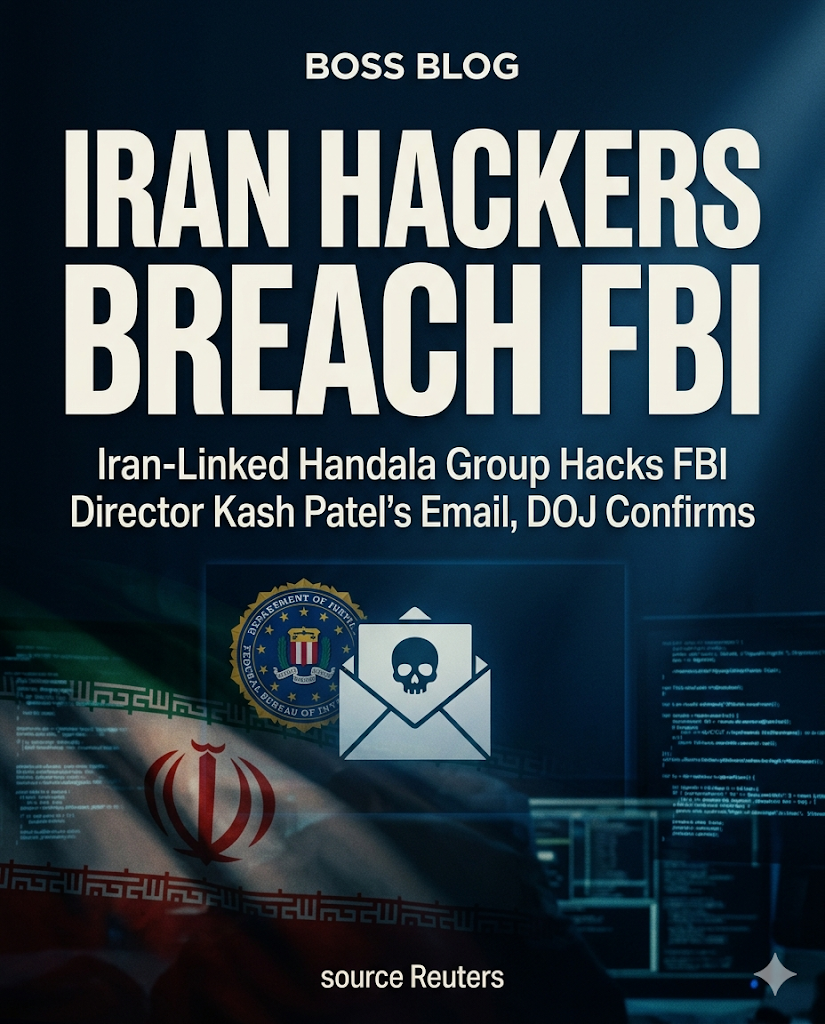
Iran-linked hackers have publicly claimed the breach of FBI Director Kash Patel's personal email inbox, publishing photographs of the director and other documents to the internet in what security researchers are calling a significant compromise of a high-ranking U.S. government official's communications.
The hacker group, identifying itself as Handala Hack Team, announced the breach on its website, declaring that Patel "will now find his name among the list of successfully hacked victims." The Justice Department confirmed that Patel's email had been compromised and that the material published online appeared to be authentic.
Breach Details
The breach involves Patel's personal Gmail account rather than official government systems, according to the Justice Department's assessment. However, personal email accounts of senior government officials often contain sensitive communications related to their official duties.
Handala published a sample of the compromised material that Reuters reviewed, showing a mix of personal and work correspondence dating between 2010 and 2019. The breadth of the timespan suggests the hackers gained access to years of accumulated communications.
The published materials include photographs, documents, and what appear to be email exchanges. The authenticity of the material has been partially corroborated by matching the claimed Gmail address to records from previous data breaches preserved by dark web intelligence firm District 4 Labs.
Handala Group Background
Handala describes itself as a group of pro-Palestinian vigilante hackers. Western cybersecurity researchers consistently link the group to Iranian government cyberintelligence units, representing one of several personas employed by Iran's state-sponsored hacking operations.
The group has previously claimed responsibility for other high-profile breaches, including an attack on Michigan-based medical devices and services provider Stryker in March 2026, reportedly deleting a massive trove of company data.
Iranian government-linked hacking groups have historically targeted government officials, journalists, and activists considered hostile to Iranian interests. The breach of the FBI director represents a significant escalation in the targeting of senior U.S. government personnel.
National Security Implications
The breach raises serious national security concerns beyond the immediate exposure of Patel's personal communications. As FBI director, Patel has access to some of the most sensitive information within the U.S. government's law enforcement and intelligence apparatus.
The publication of authentic materials from the FBI director's email could provide foreign adversaries with insights into U.S. law enforcement priorities, investigative techniques, and personnel information. Even materials dating from 2010-2019 could contain references to ongoing investigations or established intelligence relationships.
Cybersecurity experts note that personal email accounts typically lack the security controls and monitoring applied to official government systems, making them more vulnerable to compromise. However, the information contained within such accounts can still hold significant intelligence value.
Response and Mitigation
The FBI did not immediately respond to requests for comment on the breach. The Secret Service, which shares protective responsibility for senior government officials, similarly had no comment at publication time.
Handala has not responded to messages seeking clarification about the methods used to gain access to Patel's account or the full scope of data potentially compromised.
Security researchers recommend that government officials use hardware security keys and multi-factor authentication to protect personal accounts, while acknowledging that such protections do not guarantee immunity from compromise.
Broader Threat Landscape
The Patel breach reflects a broader pattern of Iranian state-sponsored hackers targeting U.S. government officials and infrastructure. Multiple Iranian-affiliated groups have intensified operations in recent months amid rising tensions between Washington and Tehran.
The breach follows multiple warnings from U.S. intelligence agencies about the growing sophistication of Iranian cyber operations. Unlike some state actors that maintain quiet intelligence collection profiles, Iranian groups frequently use public disclosures for propaganda and intimidation purposes.
The publication of personal materials from government officials' accounts also serves broader information operations objectives, demonstrating capability and potentially embarrassing targets.
Security Lessons
The incident highlights ongoing challenges with the intersection of personal and professional communications for senior government officials. Despite policies discouraging the use of personal email for official business, the realities of modern work patterns often blur these boundaries.
Experts recommend that officials maintain strict separation between personal and official communications, use designated government devices for official business, and apply the highest available security controls to any accounts that might contain sensitive information.
The rapid confirmation by the Justice Department suggests an established protocol for responding to compromises of officials' personal communications, even as the full implications of the Patel breach continue to unfold.

