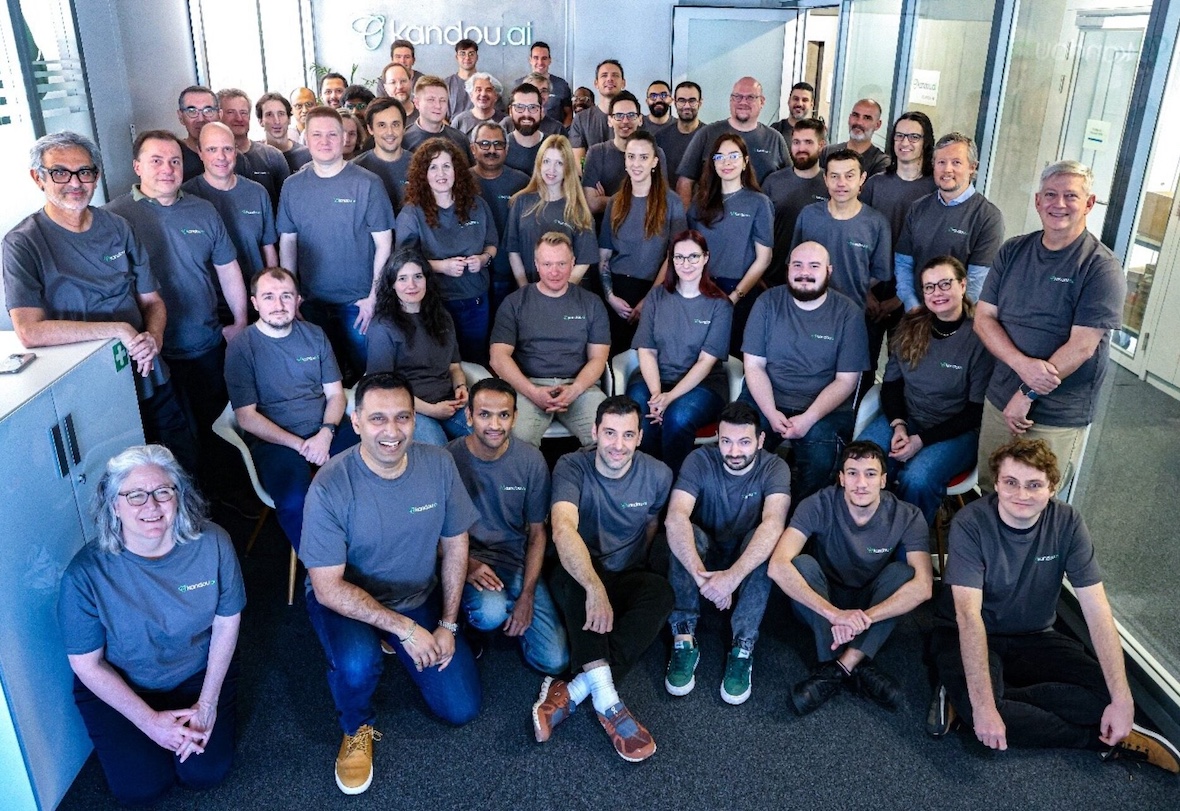
Kandou AI has raised $225 million in Series A funding to tackle one of artificial intelligence's most pressing infrastructure challenges — the memory wall problem that increasingly bottlenecks AI computing performance as models grow in complexity and computational demands.
The funding round was led by Maverick Silicon with strategic participation from SoftBank Group Corp., Synopsys Inc., Cadence Design Systems, and Alchip Technologies. The investment represents one of the largest Series A rounds for a semiconductor company focused specifically on AI workloads, bringing SoftBank — one of the technology sector's most aggressive AI infrastructure investors — onto Kandou AI's cap table.
The Swiss company's approach focuses on chip-to-chip interconnect technology that enables faster data movement between processing and memory components. Kandou AI is betting that advanced copper interconnects can address the memory bandwidth bottleneck at a fraction of the cost and complexity of optical alternatives that some industry observers predicted would dominate high-speed chip communications.
The Memory Wall Challenge
AI computing workloads have exposed fundamental limitations in how quickly data can move between processor components. The memory wall refers to the growing gap between processor speed and memory bandwidth that restricts how quickly AI systems can access the data they need to perform computations.
Graphics Processing Units have dominated AI infrastructure discussions for good reason, but memory bandwidth limitations can negate GPU performance advantages when large models must constantly wait for data. Kandou AI's interconnect technology aims to enable faster data movement between chips, reducing the performance penalty imposed by memory limitations.
Traditional interconnect technologies face scaling challenges as semiconductor processes advance to smaller geometries. Kandou AI claims its approach can maintain performance improvements even as chip geometries shrink further, avoiding the diminishing returns that plague older interconnect approaches.
The investment validates concerns that infrastructure limitations are constraining AI scaling in ways that pure processor improvements cannot address. Companies investing heavily in AI capability expansion recognize that raw GPU performance alone does not determine system-level throughput when memory bandwidth becomes the limiting factor.
Copper vs Optical Interconnect Debate
Kandou AI's technology relies on advanced copper interconnects rather than optical solutions that some industry observers predicted would dominate chip-to-chip communication at high speeds. The company is betting that copper can outlast the optical revolution, maintaining cost and manufacturing advantages even as data rates increase.
The Chord signaling technology developed by Kandou AI achieves path to Shannon capacity — the theoretical maximum information transfer rate for a communication channel — while reducing power consumption and system costs by over 10 times compared to alternative approaches.
Copper interconnects offer significant advantages in cost and manufacturing complexity compared to optical alternatives. These practical considerations may determine which technology prevails in mass market deployments where yield and manufacturability matter as much as raw performance.
Synopsys' involvement signals that electronic design automation tools and design intellectual property will support Kandou AI's commercialization efforts. The partnership provides industry validation alongside capital, suggesting the technology has passed scrutiny from semiconductor design experts.
AI Infrastructure Investment Landscape
The funding round reflects substantial investor appetite for AI infrastructure plays that extend beyond the GPU providers that have captured most previous attention. Venture capital firms and strategic corporate investors are seeking exposure to enabling technologies that support AI scaling in specialized ways.
SoftBank's investment philosophy has evolved toward infrastructure-type investments with long-term strategic value rather than purely financial bets on growth companies. The firm's participation signals confidence in Kandou AI's approach to solving computing bottlenecks across multiple markets.
Major technology companies have invested heavily in AI infrastructure, creating downstream demand for complementary technologies that address specific bottlenecks. Kandou AI's approach targets a specific pain point that GPU-focused investments have not adequately addressed.
The broader AI infrastructure market has attracted significant capital as companies position for continued AI growth across consumer, enterprise, and cloud applications. Interconnect and memory technologies represent a smaller but potentially critical segment where specialized expertise can command premium valuations.
Technical Architecture Considerations
AI systems face distinct performance constraints compared to traditional computing workloads. While general-purpose computing can often tolerate memory latency through caching strategies, AI training and inference workloads require sustained high bandwidth that stresses conventional memory hierarchies.
Kandou AI focuses specifically on inter-chip communication problems, optimizing for the data movement patterns that dominate AI workloads. The company's SerDes (Serializer/Deserializer) technology enables high-speed data transfer between chips at significantly improved energy efficiency.
Bandwidth requirements scale with model size, meaning that larger AI models create proportionally larger demands on interconnect technology. This scaling behavior suggests that interconnect improvements will become more valuable as AI models continue to grow in complexity and capability.
Energy efficiency represents another critical consideration alongside raw bandwidth. Data movement consumes significant energy in computing systems, making efficient interconnects valuable for both performance and operational cost reasons in large-scale data center deployments.
Market Opportunity Assessment
The addressable market for AI infrastructure technologies extends across cloud computing, enterprise deployments, and edge computing applications. Kandou AI's interconnect technology could apply across these segments with potential for customization based on specific performance requirements.
AI model complexity continues to grow, creating sustained demand for memory bandwidth improvements that keep processors fed with data. The memory wall problem may become more acute as models reach trillions of parameters and require increasingly sophisticated hardware arrangements.
Hyperscale data center operators represent the most immediate potential customers for interconnect improvements. Kandou AI already deployed solutions at a leading hyperscaler in 2025 and plans production scaling alongside expanded engineering operations in Hyderabad, India.
The semiconductor industry has consolidated around a smaller number of advanced process nodes, making system-level innovations like interconnect optimization increasingly important for continued performance improvements. Performance gains can no longer rely solely on process shrinks.
Industry Consolidation and Competition
The funding round signals continued investment in AI infrastructure beyond the established GPU providers that currently dominate AI computing discussions. Investors recognize that GPU performance alone does not determine AI system effectiveness when memory bandwidth constrains overall throughput.
The distinction between optical and electrical interconnect approaches may determine which companies succeed in addressing the memory wall in different deployment scenarios. Practical considerations like cost, manufacturing yield, and integration complexity favor approaches that leverage existing production infrastructure.
Synopsys and Cadence participation provides Kandou AI with access to design tools and semiconductor industry relationships that would take years to develop independently. This strategic support complements SoftBank's financial investment with industry expertise and customer access.
The company has already shipped over 20 million silicon units using its technology, demonstrating that its interconnect IP has achieved meaningful commercial deployment. The new funding will accelerate next-generation product development and expand manufacturing partnerships.