
Apple is executing a significant strategic pivot, shifting its artificial intelligence ambitions away from direct competition with OpenAI and Google toward a search-like platform embedded within the App Store. The move marks a decisive break from the company's previous approach to AI development, which had focused on building foundation models to compete directly with leading chatbots.
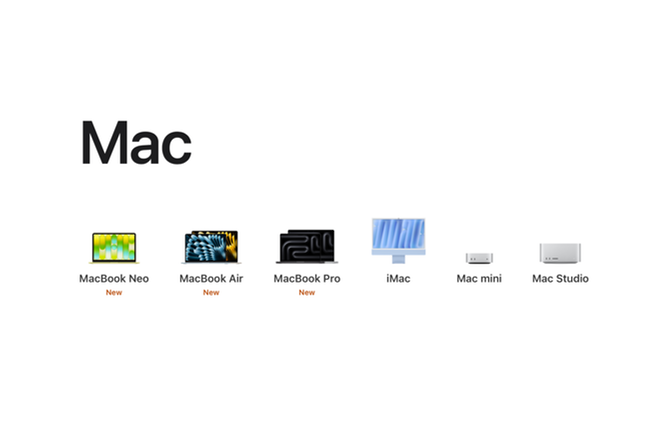
The company has officially discontinued the Mac Pro, ending the iconic cheese grater workstation's 20-year run as Apple's flagship professional desktop. The discontinuation signals a consolidation of Apple's professional computing strategy around the Mac Studio, which offers similar performance in a more compact form factor.
Rare employee bonuses announced alongside the strategic shift underscore how significant this transformation is considered internally. The bonuses, unusual for Apple which typically maintains conservative compensation practices, represent an acknowledgment that the transition requires exceptional effort from the workforce.
Strategic Rationale
Apple's new AI approach leverages its unique position as the gatekeeper of the world's most valuable app distribution platform. Rather than building chatbots that compete directly with existing offerings, the company sees an opportunity to make apps more discoverable through AI-powered search that understands user intent and context.
The App Store processes hundreds of millions of app searches daily, creating an ideal testbed for AI-powered discovery. Apple can deploy its large language models to understand what users actually want when they search, even when they cannot articulate their needs precisely.
This approach avoids the massive infrastructure investment required to compete in the chatbot space while exploiting Apple's genuine competitive advantage in understanding mobile user behavior. The company has accumulated unparalleled data about how people discover and use applications.
By focusing on app search rather than general AI assistants, Apple sidesteps the controversy that has plagued competitors' AI products. The company can deliver tangible improvements to the app discovery experience without the PR risks of AI-generated content that has embarrassed other technology companies.
Mac Pro Discontinuation
The Mac Pro's discontinuation marks the end of an era for Apple's professional computing ambitions. The machine, first introduced in 2006, represented Apple's commitment to high-end desktop computing for professional users including video editors, 3D artists, and software developers.
Apple silicon chips have fundamentally changed the calculus for professional desktop computing. The Mac Studio offers workstation-class performance in a compact form factor, making the larger Mac Pro chassis increasingly redundant for most professional users.
The cheese grater design that characterized the Mac Pro became an icon of professional computing. Its modular design and expansion capabilities attracted users who needed more customization than Apple's other machines offered.
Apple's professional desktop strategy now centers entirely on the Mac Studio and Mac Mini platforms. Both machines leverage Apple silicon efficiency while providing connectivity options suitable for professional workflows.
Employee Bonus Announcement
The rare employee bonuses represent a strategic investment in workforce retention during a period of significant change. Apple typically avoids the generous equity compensation that characterizes Silicon Valley rivals, making the bonus announcement particularly notable.
The bonuses signal that Apple leadership views the current transition as critical to the company's future. Employees in affected divisions have received payouts that in some cases represent meaningful percentages of annual compensation.
The bonuses may also serve to align employee incentives with the strategic pivot. Workers who might otherwise seek opportunities elsewhere during a period of uncertainty now have additional reason to remain committed to Apple's transformation.
These compensation changes reflect a broader shift in Apple's approach to human capital management. The company has historically maintained a conservative compensation philosophy that prioritized job security over variable pay.
Competitive Position
Apple's new AI strategy acknowledges the reality that late entrants to the foundation model race face significant disadvantages. The compute and data advantages enjoyed by OpenAI, Google, and Anthropic have created moats that Apple would struggle to overcome through conventional development approaches.
The company's App Store search opportunity represents a genuine competitive advantage that rivals cannot easily replicate. Search represents core business for Apple in ways that chatbots do not, creating asymmetric incentives for investment.
Apple's privacy positioning may also prove advantageous in app search AI. The company can deploy privacy-preserving machine learning techniques that understand user needs without the data collection practices that have drawn regulatory scrutiny to competitors.
The discontinuation of the Mac Pro reinforces Apple's commitment to a focused product lineup. Rather than maintaining legacy products that no longer fit the strategic vision, Apple has chosen to prune aggressively.
Market Implications
Apple's shift toward app search AI has significant implications for developers who depend on the App Store for distribution. AI-powered discovery could fundamentally change how users find applications, creating winners and losers among existing apps.
Developers who have relied on App Store optimization techniques may need to adapt to a new reality where AI understanding of user intent matters more than keyword matching. Apple's approach could make the app discovery process more intuitive while also creating new opportunities for apps that solve clearly articulated user problems.
The Mac Pro discontinuation will affect Apple's relationships with professional creative communities. While Mac Studio satisfies most professional use cases, the modular design and expansion capabilities of the Mac Pro had no direct replacement in Apple's lineup.
Apple shares have remained stable as investors process the strategic changes. The market appears to view the AI pivot as pragmatic rather than alarming, recognizing that competing directly in foundation models would have required investments that might not have paid off.
Future Outlook
Apple's AI strategy will unfold gradually as the company integrates new capabilities into the App Store experience. The transition away from foundation model competition frees resources for more targeted AI investments that play to Apple's strengths.
The App Store search transformation represents a multi-year effort that will require significant engineering investment. Apple must develop models that understand app functionality, user preferences, and contextual signals with unprecedented sophistication.
The Mac Pro's absence from Apple's lineup creates an opportunity for third-party peripherals and upgrade paths. Professional users who relied on the Mac Pro's expansion capabilities may need to reconsider their hardware strategies.
Apple's willingness to kill successful products like the Mac Pro demonstrates a strategic discipline that has served the company well. The iPhone maker has consistently shown it can walk away from businesses that no longer fit the long-term vision.