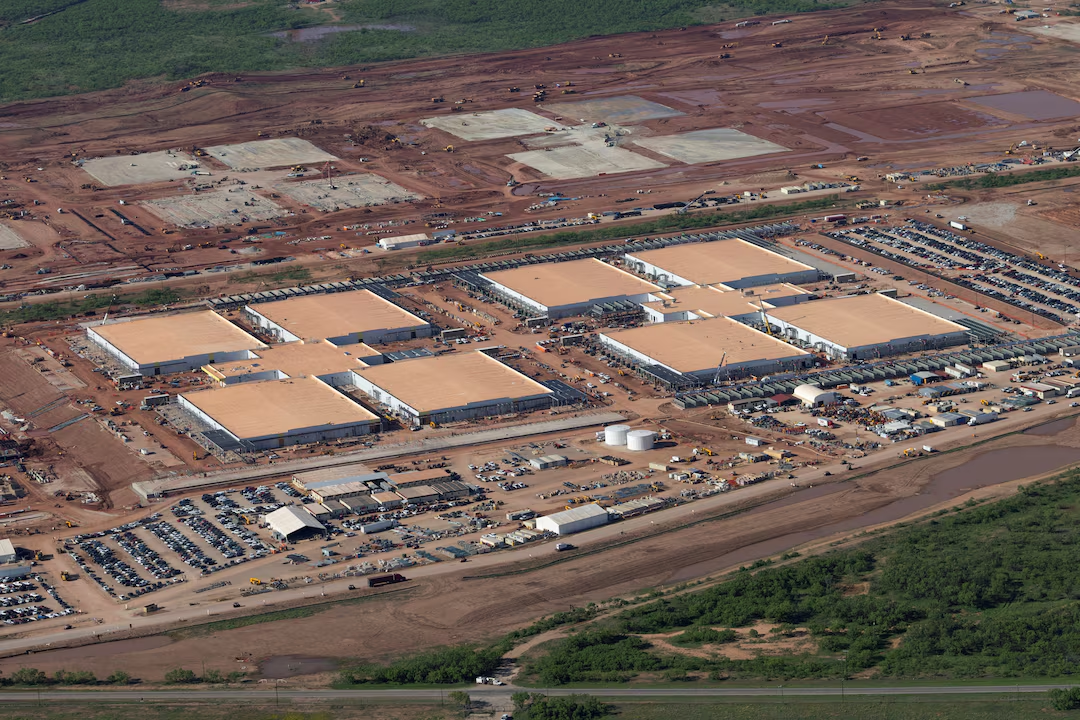
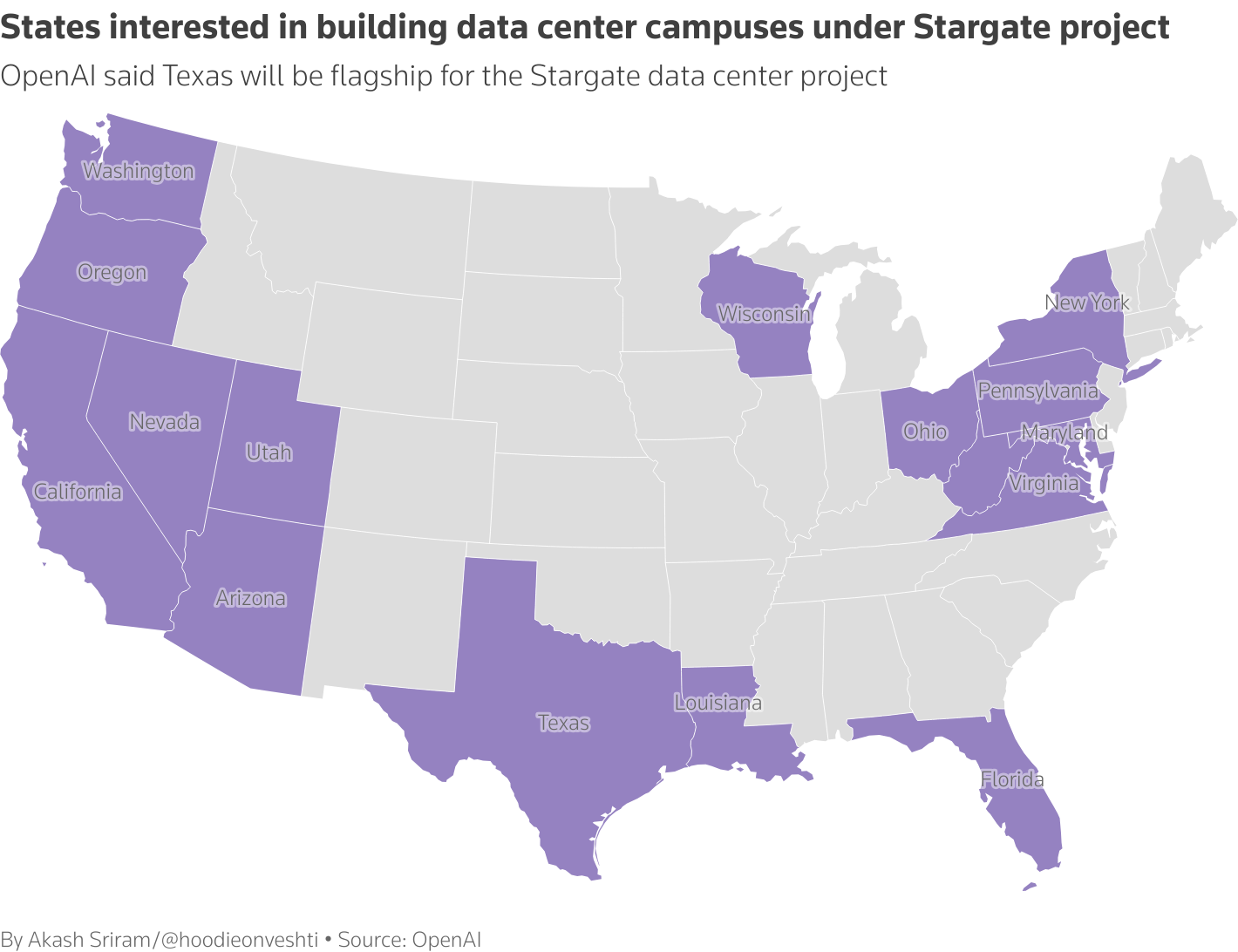
The Stargate Project, the 00 billion AI infrastructure initiative launched in January 2025, has rapidly evolved into the most significant geopolitical financial coalition since the postwar reconstruction of Western capital markets. Ten data center campuses are now confirmed across the United States, United Kingdom, and United Arab Emirates, with the project moving from announcement to active procurement at a pace that has surprised even its architects.
The Financial Architecture of Stargate
The structure of Stargate's financial backing reveals a deliberate architecture of interdependency. SoftBank, the Japanese conglomerate whose 00 billion Vision Fund redefined tech investing a decade ago, anchors the initiative alongside OpenAI. Oracle provides enterprise computing infrastructure, while MGX, Abu Dhabi's dedicated sovereign wealth vehicle for technology investments, contributes oil-derived capital. Microsoft and NVIDIA round out the primary tier, with NVIDIA CEO Jensen Huang serving as infrastructure advisor since March 2025.
The NVIDIA relationship is particularly consequential. Stargate has committed 00 billion in procurement from the chipmaker through 2027 specifically for GB300 infrastructure, a figure that positions the initiative as the single largest demand signal for Blackwell Ultra architecture. When Huang confirmed this in April 2026, he effectively signaled that the next phase of AI compute is being underwritten by a coalition that spans three continents. Arm Holdings, whose architecture underpins virtually every mobile device on earth, secured its inclusion in Stargate's reference architecture last year, further entrenching the US-adjacent technology stack at the project's core.
UK Pension Funds Enter the AI Race
The participation of the UK Government Pension Protection Fund marks a structural shift in how Western retirement savings connect to technological competition. The 00 billion commitment, finalized in March 2026, represents the first time a major sovereign pension fund has taken direct equity exposure in AI infrastructure. The implications extend beyond simple diversification: pension funds traditionally operate on multi-decade horizons, matching long-duration liabilities with stable, predictable cash flows. AI infrastructure, with its rapid technological obsolescence cycles and concentration among a handful of firms, represents a departure from that model.
Yet the Pension Protection Fund's board evidently concluded that missing the AI infrastructure cycle posed greater long-term risk than participating in it. The precedent set here could prompt similar moves by Canadian, Australian, and Continental European sovereign wealth vehicles, accelerating a global realignment of retirement capital toward technological competition.
Sovereign Wealth as Strategic Investors
MGX's role as a founding strategic partner reflects a broader pattern in Gulf capital deployment. Abu Dhabi's decision to concentrate its technology investments through a single vehicle, rather than dispersing them across multiple funds, signals a deliberate strategy of strategic influence rather than passive portfolio diversification. The 00 billion commitment from MGX is not merely a financial investment; it purchases a seat at the table where AI infrastructure standards, data governance frameworks, and compute allocation priorities are determined.
The Stargate coalition's composition is otherwise notable for what it excludes. Chinese technology firms have been deliberately shut out of the initiative's primary tier, a design choice that reinforces the emerging bifurcation of global AI development into US-aligned and China-aligned ecosystems. The UAE, despite its sovereign wealth vehicle's participation, has navigated a careful balance, maintaining commercial relationships with both blocs while positioning MGX as a trusted partner within the Western architecture.
Governance and Transparency
Stargate's governance framework includes annual disclosure requirements for financial returns, alongside progress reports on compute capacity milestones. This dual accountability structure—financial returns for investors alongside compute buildout metrics for national security purposes—represents an attempt to satisfy both commercial and strategic stakeholders within a single organizational framework.
The project has moved from announcement to active procurement faster than anticipated. With ten data center campuses now operational or under construction across three continents, the Stargate coalition has demonstrated that large-scale international coordination on AI infrastructure is achievable, even as governments in Beijing and Washington debate regulatory frameworks for the technology it will deliver.