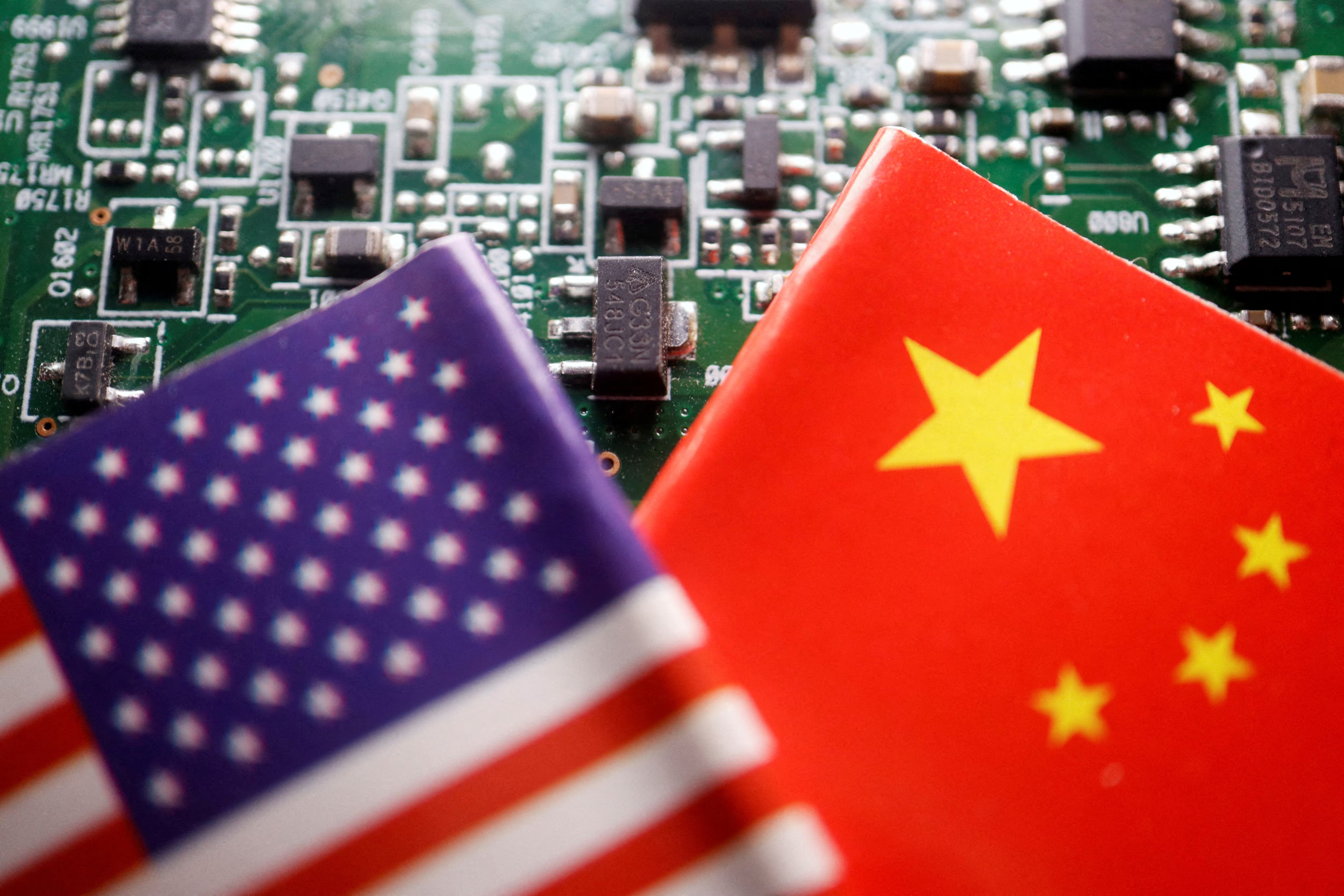
Nvidia's latest China disclosure turns geopolitics into a clean profit-and-loss event. The company said new U.S. export restrictions on its H20 AI chips will force a $5.5 billion charge tied to inventory, purchase commitments and related reserves after Washington told Nvidia the product would now require a license for exports to China.
A Tailored China Product Becomes a Balance-Sheet Problem
The filing matters because H20 was Nvidia's main AI accelerator designed to stay inside earlier U.S. limits while still serving Chinese customers. Once the U.S. Commerce Department tightened the rules again, that workaround stopped looking like a growth engine and started looking like stranded stock and deferred sales. For a company that has become the central hardware supplier to the generative AI buildout, the change lands directly on high-margin data-center revenue.
Investors Now Have a Number to Model
Markets treated the disclosure as financially material rather than theoretical: Nvidia shares fell about 6% after the filing, wiping out tens of billions of dollars in market value in a single session. The hit also ripples beyond Nvidia to cloud groups, server makers and semiconductor packaging partners that had assumed China demand for H20 would continue. The next debate is whether demand in the U.S., Middle East and other regions can replace the lost China volume fast enough to protect forward estimates.
For Nvidia, the immediate question is no longer whether AI demand is real, but how much of China's contribution has just been priced out of the boom.