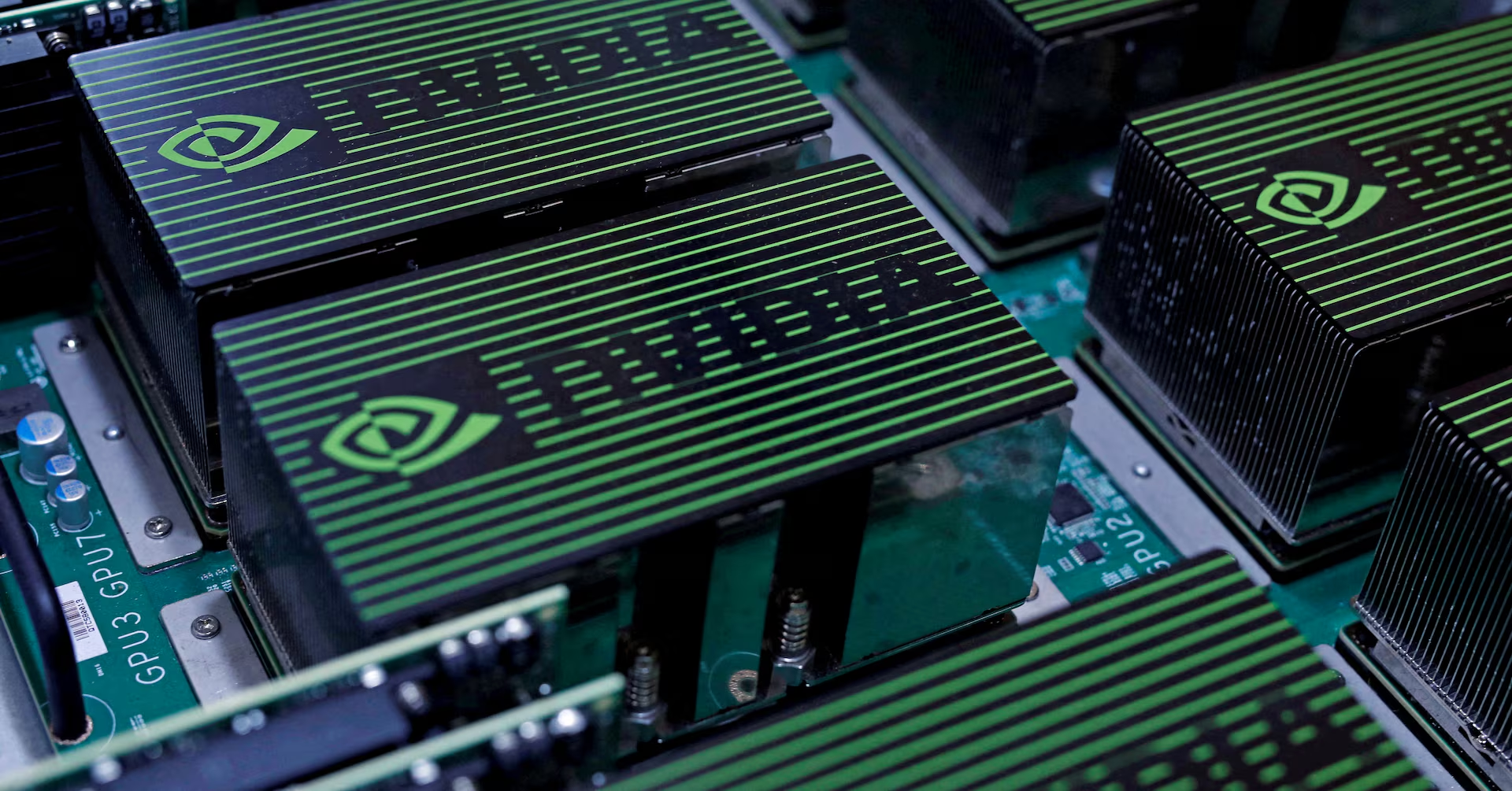
Nvidia's path into Asia is becoming a policy story as much as a product story. Reuters, the Financial Times and The Wall Street Journal have all highlighted a tougher question behind the AI boom: whether high-end chips are reaching China through Singapore and Malaysia even as Washington tightens export controls.
Southeast Asia Becomes Part of the Enforcement Map

That matters because Nvidia sits at the center of the global AI spending cycle, while the U.S. Commerce Department's Bureau of Industry and Security keeps expanding the compliance burden around advanced accelerators. If regulators suspect that distributors or cloud partners are rerouting restricted chips, every shipment becomes a legal and reputational decision, not just a sales win. Singapore and Malaysia are no longer peripheral logistics hubs in that debate; they are part of the enforcement map.
Chinese Demand Still Sets the Commercial Stakes
The commercial pressure is obvious. Chinese groups including Alibaba, Tencent and ByteDance remain major symbols of the market Nvidia wants to serve, even after Washington narrowed what can be sold. Reuters has reported on repeated U.S. efforts to curb advanced AI chip access for China, while the FT and the Journal have framed Southeast Asia as a channel now facing heavier scrutiny from customs and local authorities. For investors, that means Nvidia's growth is tied not only to demand for compute, but to how cleanly it can prove each route, customer and end use.
The next phase of the AI race will be defined as much by lawful delivery as by model performance.