
The Bank for International Settlements has put the largest crypto exchanges into a regulatory category that the industry has been resisting since the 2022 collapse of FTX and Celsius. In Occasional Paper Number 27, released on April 23 and reported by CoinDesk, PYMNTS, Bankless and others, BIS staff name Binance, Coinbase, Bybit and a small group of peers as "multifunction cryptoasset intermediaries" — MCIs — and argue that these firms now bundle deposit-taking, lending, custody, market-making and brokerage in a way that prudential regulators have spent a century separating across banks, broker-dealers and clearing houses. The label matters because it lets the BIS map crypto firms onto Basel-era frameworks for shadow banking, and it gives national supervisors a shared vocabulary to apply familiar tools — capital floors, liquidity requirements, ring-fencing — to platforms that have so far escaped them. The trigger evidence the report cites is concrete: the October 2025 crypto flash crash forced an estimated $19 billion of derivative liquidations in a single day, and the BIS uses that episode as proof that bundled-service exchanges can already produce shocks the size of mid-cap bank failures, but with none of the deposit insurance, lender-of-last-resort access, or resolution machinery that limit fallout in regulated finance.
What the MCI Label Actually Does to Regulation
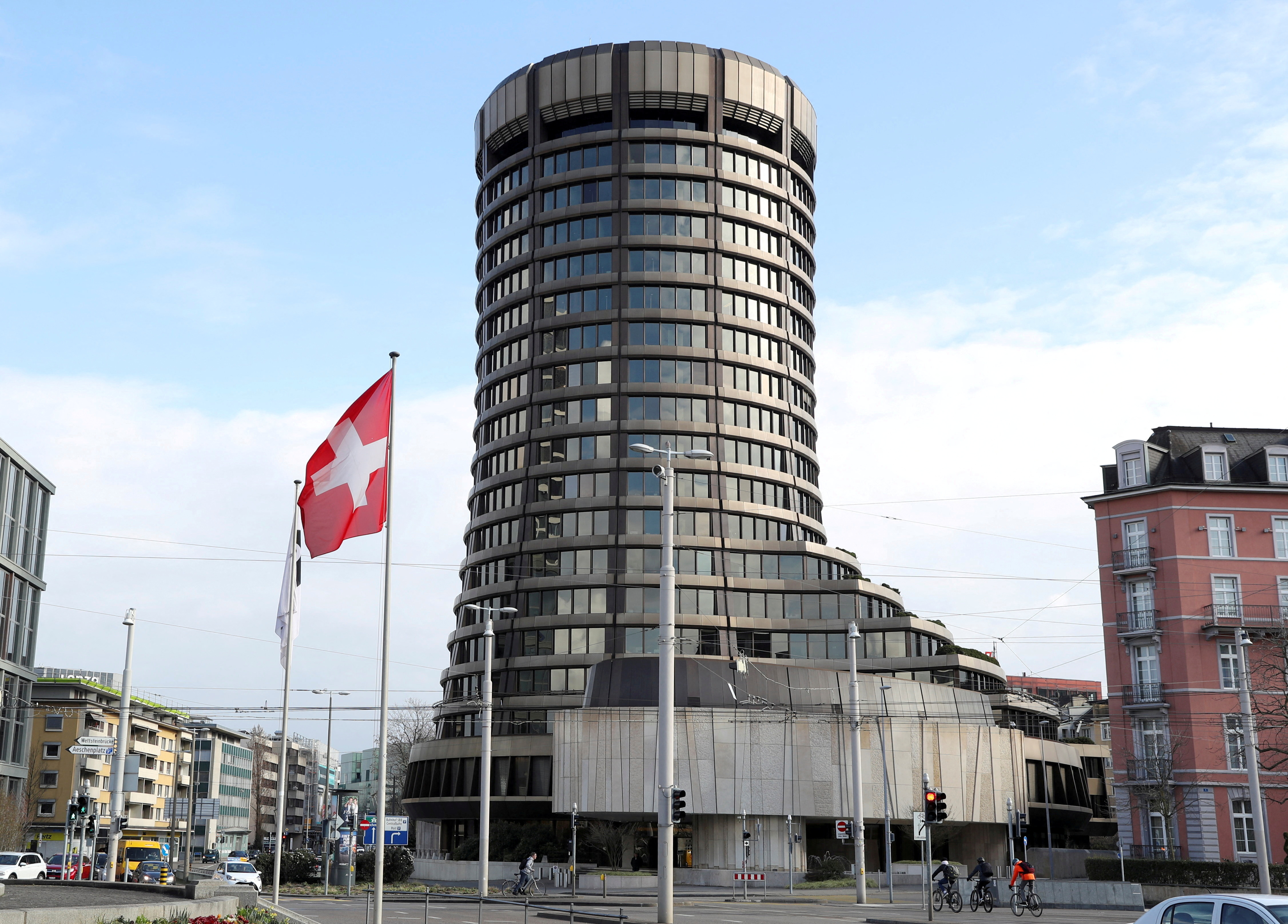
Naming a thing is half the regulatory work. The "multifunction cryptoasset intermediary" framing is the BIS doing what it did to money-market funds in the 2010s and to non-bank financial intermediaries in the 2020s: defining a perimeter, then pushing supervisors to apply existing prudential tools inside that perimeter. The framework matters because it strips the industry of the argument that crypto exchanges are sui generis tech platforms outside any familiar regulatory category. Once a venue accepts customer deposits in the form of crypto, lends those deposits out to other counterparties through earn products, runs an order book against its own balance sheet through market-making affiliates, and provides custody for assets that secure all of the above, it does most of what a bank does, and the BIS can argue that the same kinds of capital and liquidity tools should apply. The Coinbase, Binance, OKX, Bybit, Crypto.com and Kraken business models all sit inside that perimeter on the report's reading. The mechanism is not new — the Financial Stability Board has been edging toward this position since 2022 — but having BIS staff put it on paper with a formal label gives every national supervisor cover to take supervisory action even before formal legislation lands. That is the same script the FSB used to bring shadow banks under post-2008 prudential review, and it tends to produce results faster than waiting for legislatures.
Earn Products Are Unsecured Loans, and the Flash Crash Showed What That Means

The single sharpest claim in the report is that crypto earn products function economically as unsecured loans from retail customers to lightly regulated counterparties. A user who deposits stablecoins into a "yield" or "earn" balance at a major exchange is not earning interest on a deposit in any meaningful prudential sense; the user is making an uninsured loan to the exchange, which then redeploys the funds across lending, market-making, and trading-book activity. There is no capital floor against the loss of those deposits, no liquidity coverage ratio sized to redemption stress, and no deposit-insurance scheme behind them. The October 2025 flash crash, which the BIS cites as its central case study, exposed how quickly that arrangement can move from theoretical to acute: in a single day approximately $19 billion of crypto derivatives positions were forcibly liquidated as price action triggered cascading margin calls, and exchange balance sheets had to absorb the timing mismatch between liquidation revenue and customer redemption demand. Several venues paused withdrawals for hours. None failed outright, but the report's authors argue that the next event larger than 2025 could break a top-five exchange the way 2022 broke FTX, only with stablecoin-mediated linkages into traditional finance that did not exist three years ago.
The Stablecoin Bridge Is the Real Systemic Story
The interesting part of the report is not the warning about exchanges. It is the way it traces the contagion path through stablecoins into traditional finance. Tether and Circle together back roughly $200 billion of issued stablecoins with reserves dominated by US Treasury bills, repo, and money-market fund shares. Crypto exchanges hold large operational balances of those same stablecoins. If a top-tier exchange experiences a redemption run, it will sell stablecoins for fiat, which forces stablecoin issuers to liquidate Treasury bills into the wholesale funding market at exactly the moment when crypto is producing a confidence shock. That is no longer an isolated crypto problem; it is a fire sale in the world's most senior money-market instruments, with timing that overlaps with risk-off positioning in equities and credit. The BIS spells this transmission channel out in detail because it is the argument that brings central banks and traditional bank supervisors into the conversation. Pre-2022 the framing was "let crypto fail in its own corner." Post-2025 the BIS framing is that the corner now intersects with the global dollar funding market, which means even ostensibly crypto-only resolution decisions become Treasury, Federal Reserve, and ECB problems within hours rather than days.
Regulatory Response Is Already in Motion, Just Unevenly
National supervisors do not have to wait for the BIS to issue formal standards. The European Union's Markets in Crypto-Assets regulation, MiCA, already requires authorisation, capital, and conduct rules for crypto-asset service providers operating in the bloc, and EU-licensed exchanges have been working under those rules since 2025. The United States is the messier picture, with the Securities and Exchange Commission and the Commodity Futures Trading Commission still arguing about which agency owns custody of stablecoin issuance, which agency oversees lending products, and which agency is responsible for spot-market surveillance. That turf war has slowed federal action, but it has also created an opening for state regulators — New York's Department of Financial Services in particular — to write licence conditions that look a lot like the BIS framework even before federal rules land. Hong Kong's Securities and Futures Commission published a digital-asset platform licensing regime in 2024 that already requires segregated client assets, capital floors and prudential oversight for retail-facing exchanges, which is why most large exchanges that operate in Asia have spent the past eighteen months reorganising their corporate structures around HK-licensed entities. Singapore's Monetary Authority has done similar work. The BIS framework is most useful for the patchwork of secondary jurisdictions where no domestic supervisor has yet decided how to think about MCI-class venues; with a shared vocabulary, those supervisors can adopt the BIS language and start writing rules without having to invent a regulatory theory of crypto from scratch.
Industry Consequences: Compliance Costs and a Squeezed Tail
The first-order consequence is straightforward. Capital and liquidity requirements are not free. If supervisors apply Basel-style ratios to MCI-class venues, the largest exchanges will have to either hold more equity capital against their lending and earn products, fund those balances with longer-dated wholesale liabilities, or wind down the activity. Coinbase has the cleanest path because it is publicly listed in the United States and already produces consolidated audited financials; raising additional equity to back capital requirements is mechanical for it, and management has signalled willingness. Binance has the hardest path because its corporate structure is the most opaque, its US-side entity is small relative to the global operation, and its long-running compliance posture with BSA, sanctions and conduct supervisors has been costly. Bybit, OKX and Crypto.com sit in the middle: large enough to be obvious MCI-class platforms but with cleaner home-jurisdiction setups than Binance. The second-order consequence is squeezier. Mid-tier exchanges that cannot fund a Basel-style capital stack will either consolidate into larger venues, retrench into trading-only models without earn products, or move offshore into jurisdictions that decline to import the BIS framework. That last path is harder than it was three years ago because most of the major dollar-clearing banks have already pulled back from servicing offshore-only exchanges. The likely outcome is a smaller, better-capitalised top tier of regulated MCIs and a long tail of trading-only venues, with the earn-product layer concentrated in firms that can credibly fund it.
The deeper read of the BIS report is that crypto cannot keep offering bank-like products without accepting bank-like regulation, and the industry's window to argue otherwise is closing. The October 2025 flash crash forced the conversation by producing a $19 billion liquidation event with named, surviving counterparties whose balance sheets supervisors can now examine. The MCI label gives those supervisors a shared frame. The stablecoin transmission channel gives traditional bank regulators an interest. And the existing regulatory infrastructure in the EU, Hong Kong and Singapore gives the BIS framework a working precedent to point at when persuading hold-out jurisdictions that capital floors and liquidity requirements for crypto are not exotic. The exchanges that adapt early — by raising equity, simplifying corporate structures, segregating client assets, and accepting prudential oversight — will end up in a stronger competitive position when the next shock lands, because they will be the only firms regulators trust to keep operating during a crisis. The exchanges that resist will spend the next two to three years in compliance disputes that drain management attention and cap their access to dollar settlement rails. By the time the next $19 billion event arrives, the surviving top tier will look much more like a small group of well-capitalised, multi-jurisdictionally licensed banks than like a scrappy alt-finance industry, and the BIS occasional paper released this week will be remembered as the moment that transition became inevitable rather than optional.