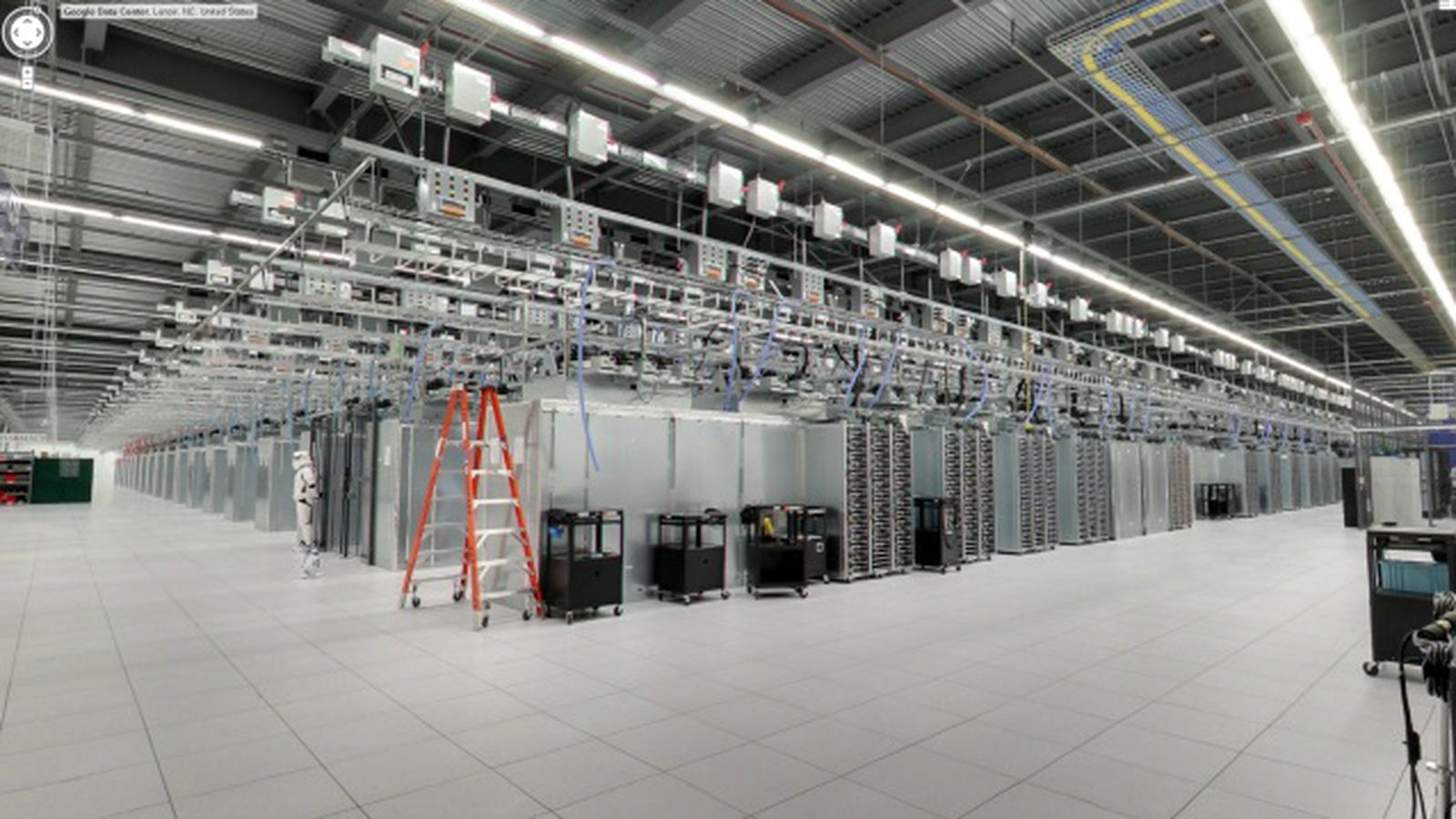
Google parent Alphabet plans to invest up to $40 billion in Anthropic, Bloomberg News reported, deepening a partnership that already includes earlier equity injections and a multi-year TPU compute relationship. The new commitment, disclosed within days of Anthropic's separately announced expansion with Amazon — $25 billion of fresh equity from AWS plus a roughly $100 billion ten-year compute pledge — turns Anthropic into the first frontier AI lab funded simultaneously by two of the world's largest hyperscalers. It also raises the bar for what a credible frontier-lab balance sheet now looks like, because the combined commitments from Amazon and Google together exceed $160 billion, and they arrive while Anthropic's run-rate revenue has climbed past $30 billion, up from roughly $9 billion at the end of 2025. The strategic message is unambiguous: hyperscalers are no longer content to be pure compute vendors to frontier labs, and they are willing to write equity checks at the scale of national infrastructure programs to make sure the lab they back stays inside their cloud, their chip stack, and their go-to-market reach.
Anatomy of a Forty-Billion-Dollar Cloud Pact
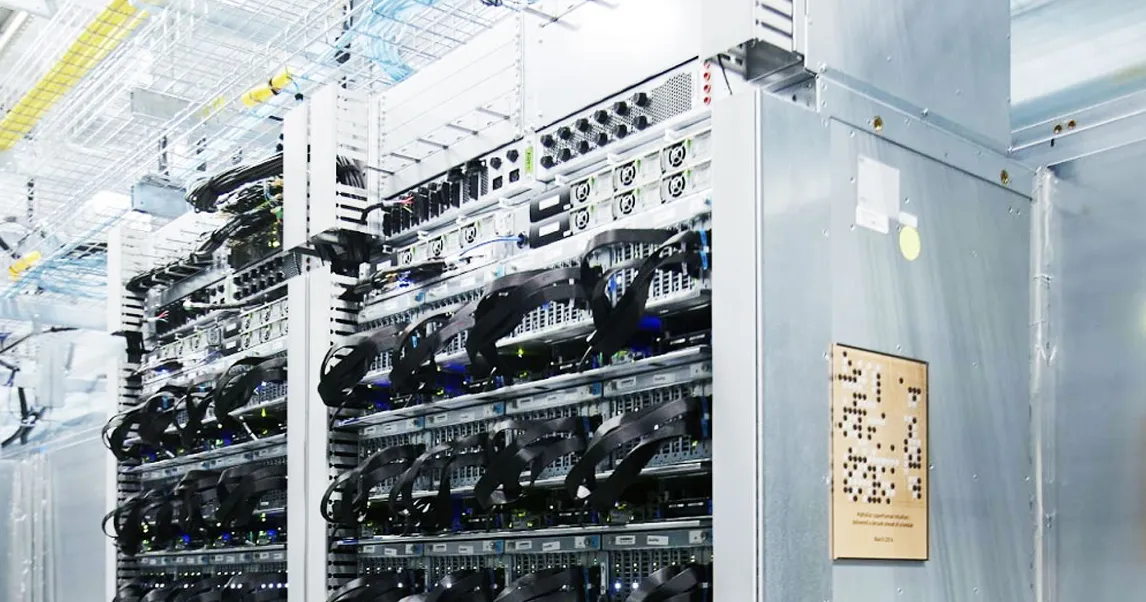
The most important line in the Bloomberg report is the size and the structure. Up to $40 billion sits at the high end of any private investment that does not also involve a controlling stake, and it represents roughly four times Google's previously disclosed equity in Anthropic. The commitment almost certainly comes paired with a multi-year TPU compute contract, in the same way Amazon's $25 billion equity stake is mirrored by a $100 billion compute pledge across Trainium2 through Trainium4. Without the compute side, the equity number would be hard to justify on a pure financial-return basis, because Anthropic's valuation already prices in continued frontier dominance. With the compute side, the deal becomes a vertically integrated industrial alliance: Google supplies the silicon and the data centers; Anthropic supplies the model and the demand. It is the same pattern Amazon has now formalized with AWS, except this time the silicon is TPU rather than Trainium, and the cloud distribution channel is Google Cloud rather than AWS. For Anthropic, the structural elegance is obvious: it gets two cloud distribution channels and two custom-silicon roadmaps to lean on, both of which have been engineered specifically to absorb frontier-model training and inference workloads at gigawatt scale.
What the Combined Backing Means for Anthropic's Cap Table
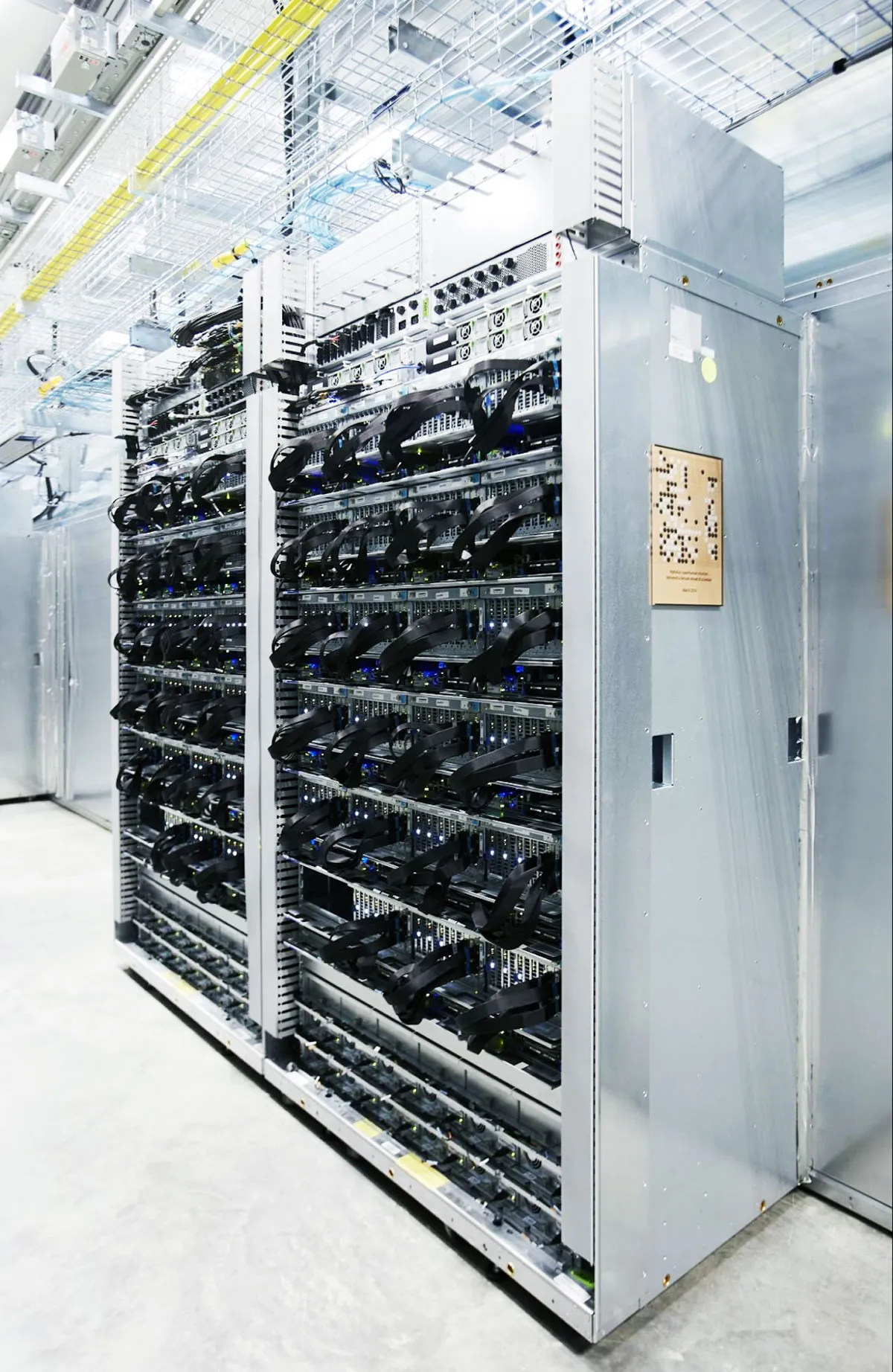
The two deals together — Amazon's $33 billion total equity ($8 billion previously disclosed plus the new $25 billion) and Google's roughly $42 billion total ($2 billion-plus from earlier rounds plus up to $40 billion now) — push Anthropic's hyperscaler-funded equity past $75 billion. That is a striking number, because it implies that the two largest cloud providers in the United States have together written equity checks worth nearly the market capitalization of a mid-sized technology platform, all into a single private company. Against Anthropic's stated $30 billion run-rate revenue, even a generous valuation multiple of 30x would put implied equity value somewhere around $900 billion, which is the regime the company is reportedly being marked at in late-stage secondary trades. The mechanics of two hyperscalers each holding meaningful equity stakes are interesting in their own right, because neither investor wants Anthropic to favor the other's cloud. The structural answer, observable in both contracts, is non-exclusivity: Claude on AWS, Claude on Google Cloud, both as first-class platforms with their own console integrations. That gives Anthropic optionality, but it also means the two hyperscalers will compete vigorously to convert their equity stakes into wallet-share inside enterprise customers, which is ultimately healthy for the company.
Microsoft and the New Two-Front Pressure on OpenAI
Microsoft has built its AI posture around OpenAI, with Azure as the privileged compute and distribution channel, and the recently announced Stargate program as the multi-hundred-billion-dollar capacity backbone. Until this week, that bet looked clean: a single dominant frontier lab, exclusively on a single dominant hyperscaler, with the largest enterprise software company in the world fronting the distribution. The Anthropic deals change the competitive geometry. For the first time, an enterprise customer evaluating frontier AI has a credible alternative model that is available on two cloud platforms, with two custom accelerator stacks behind it, and is backed by two hyperscalers whose combined equity commitment now matches what Microsoft has put behind OpenAI. That weakens Microsoft's ability to argue that the Azure-OpenAI pairing is the only safe enterprise default, and it gives procurement teams at large companies a reason to demand multi-vendor AI strategies from day one. OpenAI is unlikely to lose existing share in the near term, but the optics of "every hyperscaler bets on a different frontier lab" are now firmly broken, because Amazon and Google are jointly betting on Anthropic. That is the kind of competitive realignment that takes years to play out in revenue numbers but takes weeks to play out in customer-meeting agendas.
TPU Versus Trainium Versus Nvidia: The Silicon Reshuffle
Inside the supply chain, the deal accelerates the long-running shift away from Nvidia GPUs as the only acceptable training silicon for frontier models. Anthropic was reportedly already running large training runs on Google's TPU v5p and v6 (Trillium) hardware, and the new commitment guarantees access to whatever next-generation TPU Google brings online — likely the Ironwood family that has been telegraphed for production capacity in 2026 and 2027. Combined with the Trainium2 / Trainium3 / Trainium4 commitments under the Amazon deal, Anthropic now has visibility into two custom-silicon roadmaps that bypass Nvidia almost entirely for training, and it can lean on Nvidia only for inference where heterogeneity remains acceptable. The downstream effect on Nvidia is nuanced: Anthropic is not a Nvidia customer that the chipmaker will lose, because Anthropic is not abandoning Hopper- or Blackwell-class GPUs entirely. But the growth optionality of selling Anthropic an additional 5 GW of training silicon evaporates, and Broadcom — the design partner behind Google's TPU and increasingly behind several other custom-AI silicon programs — picks up that growth instead. Samsung, SK Hynix and Micron benefit either way, because both Trainium and TPU are large HBM consumers, but the geographic mix of fab and packaging allocation shifts subtly toward TSMC's customers that aren't Nvidia. Every constraint in the system — TSMC 4-nanometer and 3-nanometer wafer slots, CoWoS advanced packaging, and HBM allocations — has to be re-priced against a world where two hyperscalers each control a frontier-lab compute pipeline.
Antitrust, Safety, and a Two-Patron Frontier Lab
The structural anomaly of having two of the four largest hyperscalers each holding multi-tens-of-billions-of-dollars of equity in the same private AI lab is going to attract regulator attention on both sides of the Atlantic. The US Federal Trade Commission has previously studied minority investments by Microsoft into OpenAI and by Amazon and Google into Anthropic for whether they constitute de facto control, and those reviews concluded short of formal enforcement action. The new commitments push the equity-and-compute concentration into a regime that is harder to wave away, because it involves coordination of capacity decisions, customer pipelines, and software-stack roadmaps across the two largest cloud providers. European Commission staff who already opened informal inquiries into similar arrangements are likely to revisit them. Anthropic's own narrative around constitutional AI and safety positioning gives it some cover, and the company will argue that having two hyperscaler patrons reduces single-vendor lock-in rather than increases it. The Chinese export-control angle also matters: a frontier lab whose training stack is entirely on US-designed custom silicon, with no Nvidia dependency for the frontier training runs, is a much harder target for any future US-side rule that would otherwise target Nvidia exports, and a much easier subject for parallel restrictions if Beijing decides to limit Anthropic-tier capability inside its borders. The deal is therefore as much an industrial-policy event as a financial one.
The frontier AI race has now reorganized around a proposition that would have seemed far-fetched even at the end of 2025: the only viable scale for a flagship lab is to be funded simultaneously by two hyperscalers willing to write equity checks measured in tens of billions of dollars and back them with multi-gigawatt compute commitments spanning a decade. It is the kind of structure that could only emerge when frontier-model training economics cross a threshold where capital intensity, silicon specificity and power-grid access are all simultaneously binding constraints, and when the returns on getting those constraints right are large enough to justify hyperscaler balance-sheet commitments that rival entire national infrastructure programs. That is a much higher bar than even six months ago, and it concentrates the competitive map further around the labs with credible enterprise revenue and the hyperscalers willing to underwrite that revenue's compute backbone. Microsoft and OpenAI must respond, and the response will probably take the form of even larger Stargate-class commitments and possibly its own multi-hyperscaler arrangement to neutralize the optics. Smaller frontier labs face a harder choice: pair up quickly with at least one hyperscaler willing to back them at a similar scale, or accept that the durable competitive layer above them will get very thick, very fast. Enterprise buyers, meanwhile, get the most direct upside in the near term: more first-class Claude availability across both AWS and Google Cloud, deeper integrations into the data and identity stacks they already use, and a clearer cost curve for the kind of large-scale AI inference that is finally moving from pilots into production. The next twelve months will be measured less in model benchmarks and more in announcements of who else can credibly write a $40 billion equity check into a frontier lab while simultaneously committing to host its compute. On the current evidence, the answer is "not many," and the labs and hyperscalers that cannot meet the new bar will quickly find themselves in a tier below the Anthropic-Amazon-Google stack.