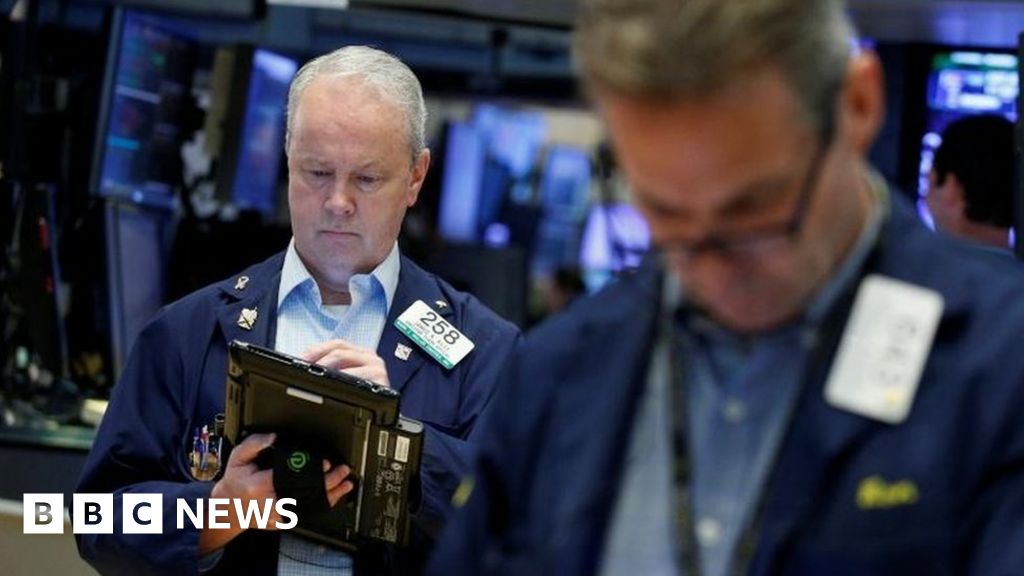
The same conflict that darkened the International Monetary Fund's April 2026 outlook has produced a paradox Wall Street cannot ignore: the Strait of Hormuz disruption that shaved 0.2 percentage points off the global growth forecast simultaneously handed the big American banks their most profitable quarter in years. Goldman Sachs posted revenue of $17.23 billion, its second-highest quarterly total on record. Bank of America generated $8.6 billion in net income, an earnings-per-share figure its executives said was the strongest in roughly two decades. The mechanism linking geopolitical catastrophe to financial-sector windfall is not coincidental. It is structural, and it carries a distinct set of second-order risks that policymakers and investors are only beginning to quantify.
The IMF published its World Economic Outlook on April 14 in Washington, releasing data that framed the year's central tension with unusual clarity. Global growth is now projected at 3.1 percent for 2026, down from the 3.4 percent forecast that preceded the Middle East war. Global headline inflation has been revised upward to 4.4 percent, a full 0.6 percentage points above earlier estimates, driven primarily by surging oil, gas, and fertilizer costs. Those numbers sit at the intersection of two forces that rarely coexist in standard models: slowing output and rising prices, the configuration that policymakers call stagflation, and that central banks regard as the most difficult environment in which to operate. The IMF's chief economist described the situation as "a new test for the global economy's resilience," one that arrives before the system has fully recovered from the inflationary surge of 2021 through 2023.
How the Hormuz Blockade Breaks the Energy System
The physical chokepoint at the center of this crisis is the Strait of Hormuz, through which roughly one-fifth of global oil trade passes on any given day. The partial blockade that followed the outbreak of hostilities between U.S.-Israeli forces and Iran damaged several critical hydrocarbon facilities in the region and created cascading insurance, routing, and delivery problems that spread far beyond the Persian Gulf. Energy traders at Goldman Sachs, JPMorgan, and Citigroup described a market characterized by violent short-term price swings and pronounced regional dislocations. Those are exactly the conditions that reward banks with large commodities desks and deep risk-management infrastructure.
The IMF's adverse scenario, outlined in a supplementary annex to the World Economic Outlook, models what happens if hostilities intensify further. Under that scenario, global growth falls to 2.5 percent this year and inflation climbs to 5.4 percent, numbers that would represent a material deterioration from the post-pandemic recovery trajectory. The Fund warned explicitly that the closing of Hormuz raises the prospect of a major energy crisis should the conflict extend into the second half of 2026, with knock-on effects for food security, shipping costs, and sovereign debt sustainability in import-dependent emerging markets. Al Jazeera reported that the IMF's Spring Meetings in Washington were dominated by the Hormuz question to a degree that overshadowed the traditional fiscal and exchange-rate debates.
The Money Inside the Volatility
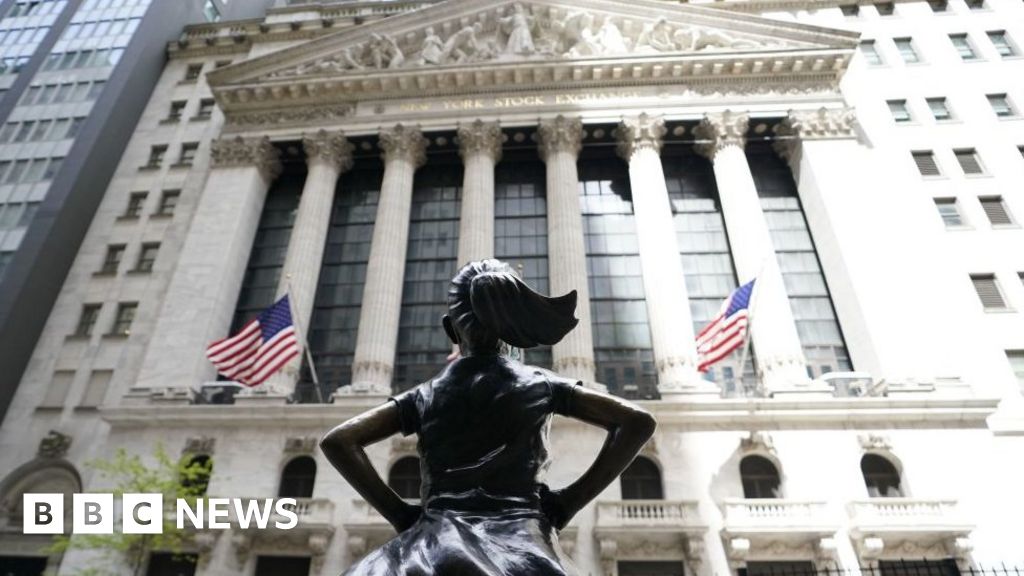
Goldman Sachs reported first-quarter earnings of $17.55 per share against a consensus estimate of $16.49, with revenue of $17.23 billion against an expected $16.97 billion. Profit climbed 19 percent from the year-earlier quarter to $5.63 billion. The standout line was equities trading, which rose 27 percent year-over-year to $5.33 billion, a record for that desk. The bank's performance illustrated precisely how war-related volatility translates into trading revenue: wider bid-ask spreads, more frequent client repositioning, and elevated demand for hedging products all flow directly into market-making income. Goldman's fixed income desk was a notable exception, with revenue falling 10 percent to $4.01 billion and missing the StreetAccount estimate by $910 million, an unusually large shortfall that underlined how unevenly the volatility premium was distributed across asset classes.
Bank of America's quarter was comparably strong across different product lines. Net income of $8.6 billion, equal to $1.11 per share, exceeded analyst expectations and marked a generational high for the bank's earnings-per-share metric. Net interest income rose 9 percent to $15.9 billion, reflecting a rate environment that, while restrictive, remains favorable for deposit-funded balance sheets. Equities trading revenue climbed 30 percent, matching the trend Goldman reported. The broad-based strength across the sector is confirmed by Morgan Stanley's results as well, where stock traders benefited from what analysts called a record windfall. That convergence across institutions points to the first quarter of 2026 as a structural inflection point for bank profitability, not an idiosyncratic spike driven by any single firm's positioning.
Competitive Reshuffle Among Central Bank Paths
The war has injected significant uncertainty into central bank forward guidance across multiple jurisdictions simultaneously, creating a competitive reshuffling among institutions positioned for different rate trajectories. The Federal Reserve entered 2026 on a path toward a neutral rate setting of around 3.25 percent, but energy-driven inflation has complicated the timing and magnitude of any further easing. Bloomberg Economics noted that the Trump administration's confrontation with Iran looks increasingly likely to force a new round of tightening among central banks that had been counting on price stability to give them room to cut.
The European Central Bank faces a structurally different problem. Having guided markets toward a stable rate of approximately 2 percent, Frankfurt is now caught between inflation impulses from energy markets and a growth outlook that has softened materially. Europe imports a substantial share of its gas from sources that transit or depend on Middle Eastern supply chains, making its energy exposure more acute than its headline consumption data initially implies. ING's macro team in Amsterdam projects that the ECB will need to see large negative data surprises before it considers further cuts, and described the current policy position as "the good place" under meaningful external threat.
The Bank of Japan presents the most asymmetric case among major central banks. Tokyo entered 2026 with a policy rate well below any of its Group of Seven peers and a mandate that has only recently tilted toward normalization. The BoJ's base case projects the policy rate reaching 1.0 percent by the end of the year, but an energy shock that raises import costs could either accelerate normalization to contain inflation or stall it if the real-economy damage proves severe enough to require accommodation. Japan purchases virtually all of its oil and a large share of its LNG from Middle Eastern sources, making its vulnerability to a prolonged Hormuz disruption among the highest of any developed economy. The Bank of England, for its part, is expected to deliver two additional cuts in 2026, bringing its rate to 3.25 percent, a trajectory that remains contingent on whether inflation pressures subside faster than current energy market pricing implies.
Downstream Pressure on Sovereigns and Credit
The combination of slower growth and higher inflation creates a fiscal stress test for sovereign borrowers that the IMF flagged as an underappreciated risk in its April briefing. Higher commodity prices increase import bills and fuel subsidies for governments across the developing world, compressing primary balances at exactly the moment when higher global interest rates raise refinancing costs. The Fund's economists noted that several emerging-market sovereigns that had achieved debt stabilization over the past three years may find that trajectory reversed by a sustained energy shock, with sub-Saharan African and South Asian importers facing the steepest adjustment burden.
In credit markets, J.P. Morgan Global Research has flagged a shift in focus from macro to micro: from broad rate-path questions to individual issuer stress. Spreads are expected to widen in 2026, with the steepest moves likely in high-yield and emerging-market corporate debt where energy cost pass-through is most direct. Gold, which J.P. Morgan maintains as a bullish position in its global research outlook, is expected to reach $5,000 per troy ounce by the fourth quarter, a price level that would reflect both safe-haven demand and structurally elevated inflation expectations. The confluence of a weaker global growth outlook and higher commodity prices also raises the probability of renewed currency pressure in current-account deficit economies, several of which entered 2026 with limited reserve buffers.
Policy Signals and Strategic Positioning
The IMF's April World Economic Outlook carried an implicit policy message that governments and central banks will have to do more with less. Fiscal space has narrowed after years of pandemic-related spending. Monetary space has narrowed after the rate cycles of 2022 and 2023. The geopolitical space for multilateral coordination, the kind that helped manage the 2008 financial crisis and the 2020 pandemic shock, looks constrained by the same alliance dynamics driving the conflict. The Fund called for "a concerted global response" but acknowledged in its press briefing that the institutional infrastructure for such a response is weaker than at any point in the post-war period. Pierre-Olivier Gourinchas, the Fund's chief economist, told reporters that the current situation requires central banks to communicate clearly and act consistently, while acknowledging that the roadmap for doing so in a stagflationary environment offers no obvious template.
For markets, the near-term implication is a continuation of the pattern that defined the first quarter: elevated volatility, strong trading revenues at large broker-dealers, upward pressure on commodity prices, and a premium on financial institutions with the balance-sheet depth to serve as liquidity providers when other participants retrench. Goldman Sachs and Bank of America's results confirm that the largest American banks are currently well positioned for that regime. The question that no first-quarter earnings release answers is how long the regime lasts, and what replaces it when volatility eventually subsides.
The IMF's 3.1 percent growth figure is not a crisis number by the standards of 2008 or 2020. But it represents a meaningful deceleration from a trajectory that looked, as recently as January, like a durable expansion. The 0.6-point inflation revision is not hyperinflation. What makes the current configuration strategically significant is that both numbers are moving in the wrong direction at the same time, and that the policy tools available to correct one tend to worsen the other. Raising rates to control inflation slows growth. Cutting rates to protect growth risks entrenching inflation. The war in the Middle East did not create that dilemma, but it has made the dilemma sharper, more urgent, and considerably harder to escape.