When Warner Bros. Discovery shareholders cast their ballots on April 23, the outcome was never really in doubt. About 1.74 billion shares voted in favor of Paramount Skydance's $110.9 billion takeover of the cable and streaming giant; only 16.3 million shares voted against. By any measure, it was a landslide. Then Paramount stock fell 4.5% the following day.
The market's muted response to an overwhelming vote of approval tells a more complicated story. Paramount Skydance is acquiring the owner of HBO, CNN, and Warner Bros. film studio for $31 a share in cash, a package backed by nearly $50 billion in syndicated debt and $24 billion in equity from three Gulf sovereign wealth funds. The structure is unprecedented in scale for Hollywood, and it hands Paramount chief executive David Ellison a combined company that, on paper, rivals Disney for breadth of intellectual property. But it also straps that company with a debt load that some analysts are already comparing to the leveraged buyouts that destabilized television companies in the last decade. Whether the content assets can service the debt is now the central question of the deal.
Regulatory clearance from the Department of Justice, the Federal Communications Commission, and European authorities still stands between Paramount and a transaction it hopes to close by September 2026.
How the Transaction Came Together
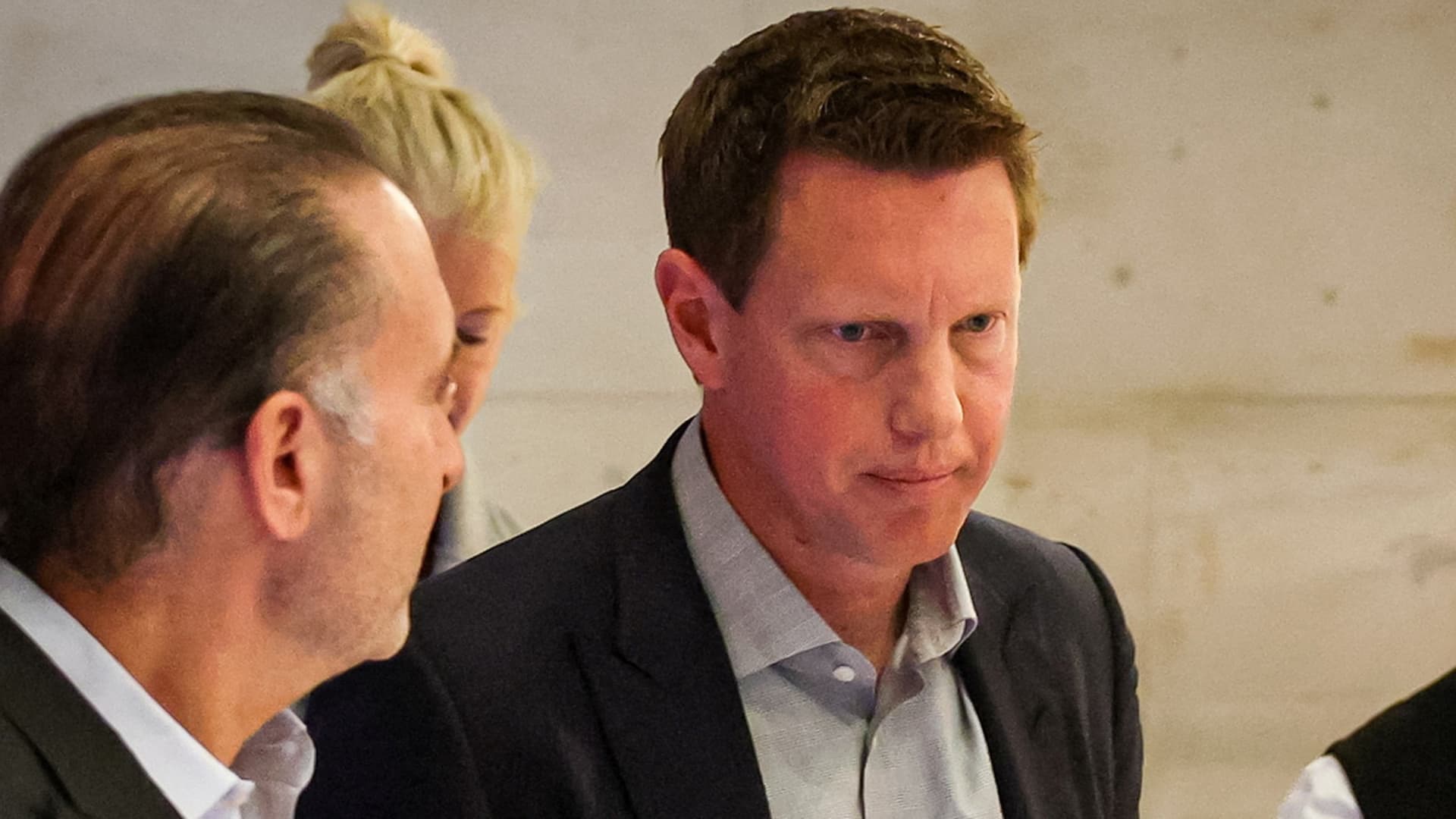
The route to this deal was not straightforward. Netflix held a preliminary agreement to acquire Warner Bros. Discovery before Paramount Skydance emerged as a competing bidder earlier this year. Netflix ultimately withdrew, apparently unwilling to assume the full weight of WBD's legacy cable liabilities alongside its streaming assets. Paramount moved in with a higher all-cash offer, and WBD's board declared it a superior bid.
Paramount Skydance is itself the product of a 2024 merger between Skydance Media, the David Ellison-controlled production company behind recent Top Gun and Mission: Impossible sequels, and the legacy Paramount Global. That deal folded the CBS broadcast network, Paramount+ streaming, MTV, Nickelodeon, and the historic Paramount Pictures film studio into Skydance's orbit. Adding Warner Bros. Discovery now would append HBO, Max, CNN, TBS, TNT, Warner Bros. film studio, and DC Studios to that portfolio.
Under the terms approved April 23, WBD shareholders receive $31 in cash per share. Warner's shareholders voted nearly unanimously in favor, though they separately and emphatically rejected the exit compensation packages proposed for WBD chief executive David Zaslav and other departing executives. The vote against pay packages carries no legal force, but it underscores investor skepticism toward a management team that oversaw WBD's stock fall roughly 60% from its post-merger peak. Zaslav's exit under a deal that wipes out his position is therefore both a financial and a reputational epilogue to a five-year tenure defined by cost-cutting and streaming pivots that never fully delivered.
The Debt Architecture
The financial structure underneath the deal is as consequential as the editorial strategy above it. Paramount has committed to a bridge facility of $49 billion, reduced from an initial $54 billion after the company secured permanent financing terms. Bank of America Merrill Lynch, Citigroup, and Apollo Global Management are providing a combined $57.5 billion debt commitment for the transaction. The permanent tranche includes a $5 billion Term Loan A and a $5 billion revolving credit facility from a syndicate of 18 lenders.
The combined entity will carry a debt pile that analysts estimate at roughly $55 billion to $60 billion once the deal closes, accounting for both legacy WBD obligations and the new acquisition financing. That figure is nearly three times the pro forma annual revenue of WBD's direct-to-consumer streaming segment, and it sits atop a cable-television business generating declining linear advertising and subscriber revenue quarter by quarter.
Apollo's participation is particularly notable. The private credit giant has been expanding aggressively into entertainment debt financing and has acquired meaningful content library positions through its credit business. Its co-commitment alongside Bank of America and Citi signals that private credit markets, not just traditional investment-grade syndication, are now sized to handle the largest media transactions on the planet. For Wall Street, that marks a meaningful structural shift in how Hollywood deals get financed: the syndication desk no longer has a monopoly.
Gulf Sovereign Funds Back the Equity Stack
On the equity side of the ledger, Paramount Skydance secured $24 billion from three Gulf sovereign wealth funds. Saudi Arabia's Public Investment Fund contributed approximately $10 billion, with the Qatar Investment Authority and Abu Dhabi's sovereign vehicle providing the remainder. Paramount confirmed the investments in an SEC filing that also specified all three funds will receive no governance rights, no board representation, and no voting rights in the combined company.
That last detail is critical. The absence of governance rights means the investment does not trigger a mandatory review by the Committee on Foreign Investment in the United States, the panel that scrutinizes foreign acquisitions of sensitive American assets. An entity controlling CNN, CBS News, and a major film studio would ordinarily attract sustained CFIUS attention if foreign governments held sway over its direction. By structuring the Gulf capital as pure passive equity, Paramount has threaded that needle. Whether the DOJ or FCC accepts that framing when reviewing a deal that places two major broadcast news organizations under a single corporate parent funded in part by three state-controlled funds is a question that may not be fully resolved before closing.
Saudi Arabia's Public Investment Fund has been deploying capital across Western entertainment and sports at scale, from a $620 million stake in Nintendo to the financing of LIV Golf. The Paramount bet fits a broader pattern of using Western media exposure as economic diversification under Vision 2030, though the political salience of placing Gulf capital into U.S. broadcast news has drawn scrutiny from lawmakers in both parties. When Paramount's stock jumped 11% on the day the Middle East funding was confirmed, the market was briefly pricing in the deal certainty that Gulf backing provided. The subsequent retreat on April 25, after WBD shareholder approval, reflected a return to the harder arithmetic of debt service.
A New Streaming Map
For subscribers, the operational consequence of the deal is direct: HBO Max and Paramount+ will merge into a single streaming platform. Combined, the two services hold roughly 15% of on-demand subscription share in the United States, according to industry measurement data. That positions the merged platform third in the domestic streaming market, behind Netflix at 19% and Disney's combined Disney+/Hulu portfolio at approximately 27%, and just ahead of Amazon Prime Video at 17%.
The content logic is compelling on paper. HBO's drama library, anchored by Succession, The Wire, and an expanding slate of prestige series, is widely regarded as the strongest in the industry for premium adult viewing. Paramount's catalogue adds Top Gun, Mission: Impossible, the Star Trek franchise, and a SpongeBob library that dominates kids' streaming metrics. The Warner Bros. film studio contributes DC superhero properties and a Harry Potter franchise that Zaslav had already extended with HBO spinoff series in active production.
The two movie studios, Paramount Pictures and Warner Bros., will operate as separate production and distribution labels rather than consolidating into a single entity. That structure partly addresses anticipated antitrust scrutiny about a single company dominating theatrical release windows. On the news side, however, the deal does place CBS News and CNN under the same corporate parent for the first time, a consolidation that critics argue concentrates two of the country's largest broadcast and cable news operations in a single ownership structure.
The competitive pressure on Disney is the most significant downstream implication for the broader market. Disney has been seeking a live sports anchor to complement its entertainment streaming and bolster ESPN+. A combined Paramount-WBD entity would carry CNN, TNT Sports, CBS Sports broadcast rights, and the Paramount Network sports portfolio into a single bundle, assembling a sports-and-entertainment combination that Disney does not currently have a direct answer to. Netflix, which spent heavily on NFL games and live sports rights in recent years, would face an enlarged competitor with comparable content depth and a significantly broader linear TV footprint.
The Regulatory Gauntlet
Paramount's stated goal of closing by September 2026 runs against a regulatory calendar that is dense on every front. The Department of Justice antitrust division must determine whether combining two major studios alongside several cable news networks and broadcast station groups materially harms competition in production, distribution, or news. That review alone is unlikely to complete inside four months under current DOJ staffing and backlog.
The FCC must separately approve the transfer of broadcast licenses for CBS affiliates, a procedurally distinct process that historically takes six to nine months after formal application. Commissioners have signaled they will scrutinize the news consolidation angle carefully, and the political environment surrounding broadcast ownership rules has grown more contentious since the agency revisited its media ownership framework.
European regulators present a parallel track. The European Commission is expected to open a phase-one review of the deal's effect on streaming markets across the EU, where both HBO Max and Paramount+ have active subscriber bases and content licensing frameworks that raise questions about distribution market concentration. Analysts have noted the commission may demand asset divestitures before granting clearance.
Domestically, California Attorney General Rob Bonta has opened a preliminary inquiry into antitrust implications. Democratic senators Elizabeth Warren of Massachusetts and Cory Booker of New Jersey have written to the DOJ urging heightened scrutiny of the combined entity's effect on news diversity and labor markets for creative workers. More than 4,000 writers, directors, actors, and producers signed an open letter opposing the merger, citing fears of mass layoffs and reduced diversity in content commissioning as the new company looks to cut costs to service its debt. Paramount has agreed to pay WBD shareholders a fee for any regulatory delay beyond the September target, a provision that converts the timeline risk into a quantifiable cash liability sitting on the balance sheet before the deal has even closed.
The vote on April 23 was, in procedural terms, the easy part. Every shareholder who voted yes was doing arithmetic on a $31 cash offer against a stock that had fallen for years. What comes next is harder: a DOJ that has signaled willingness to block large media mergers, a commission in Europe that has its own theories of harm, and a debt structure that gives the new Paramount almost no margin for operational error in its first three years as a combined company.
The Paramount-WBD transaction is the clearest expression yet of a thesis that has been building in Hollywood boardrooms for three years: streaming's war cannot be won through fragmentation. Netflix's scale, built on a single global platform and a $17 billion annual content budget, has demonstrated that the economics of streaming reward size and punish overlap. The platforms that survive will be those with libraries deep enough to justify subscription prices above $20 a month, sports rights broad enough to prevent churn, and distribution reach spanning broadcast, cable, and digital simultaneously.
Paramount Skydance, if it clears every regulatory hurdle on schedule, will control the pieces to build that kind of platform. Whether it can service $55 billion-plus in debt while also funding the content investment required to compete with Netflix and Disney is a different question, and it is the one Paramount's stock was answering on April 25. Gulf sovereign funds provided the equity; Bank of America, Citi, and Apollo layered on the leverage. The content must now earn its keep. Regulators, creditors, and 4,000 angry screenwriters will all be watching.