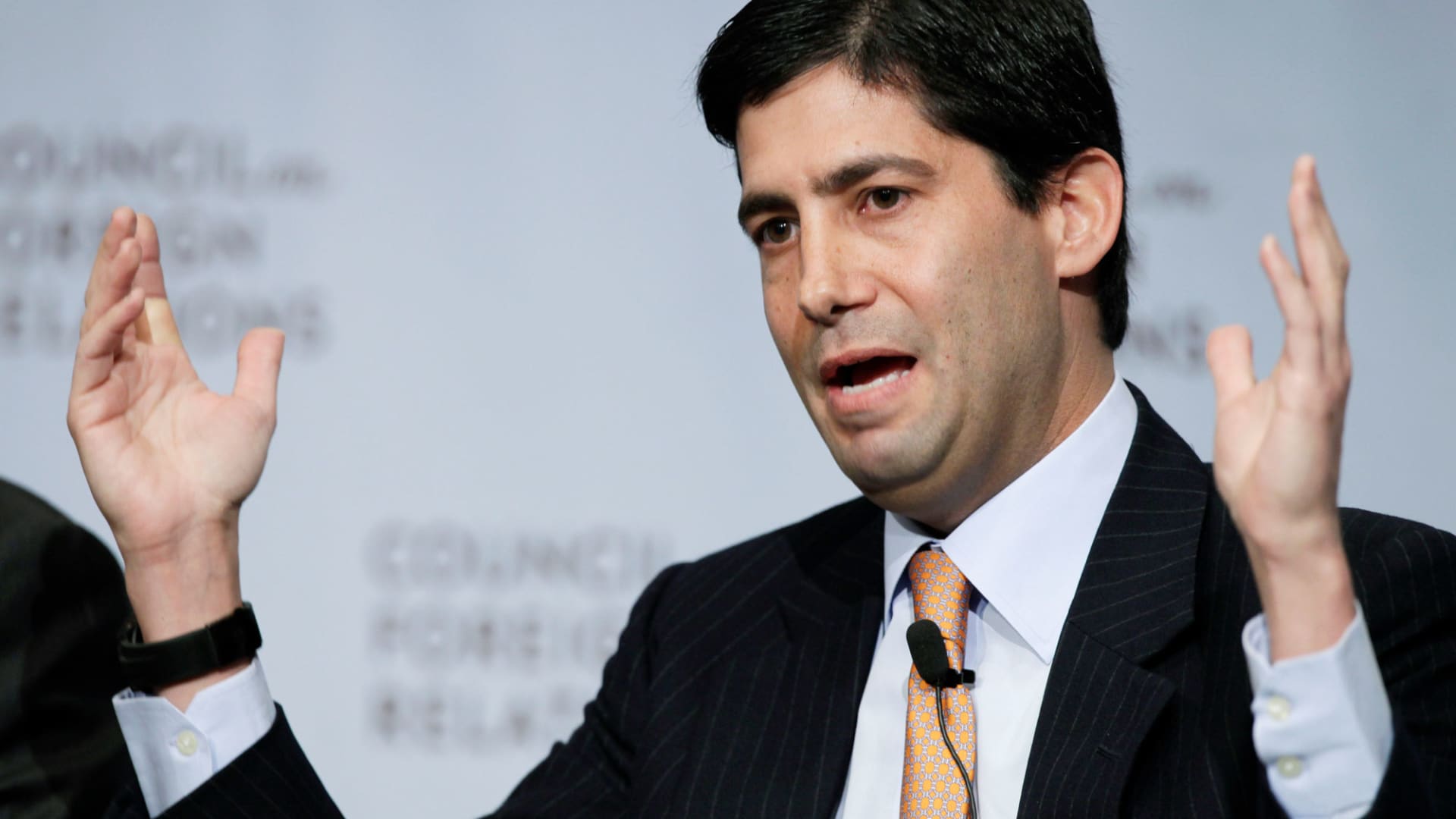
The Justice Department dropped its criminal investigation into Jerome Powell on Friday, April 25, and by the close of business the Federal Reserve's leadership succession had moved from political speculation to imminent reality. Sen. Thom Tillis of North Carolina, whose procedural hold had stalled Kevin Warsh's nomination for three weeks, signaled within hours that he would no longer block a committee vote. Republicans hold a 12-to-10 edge on the Senate Banking Committee; with Tillis back in line, the confirmation arithmetic is straightforward, and the calendar is unforgiving. Powell's term as chair expires May 15. His final Federal Open Market Committee meeting convenes Tuesday, April 28, and concludes Wednesday afternoon with what is likely his last press conference in the role. The era Powell defined, from zero-rate pandemic emergency through the most aggressive tightening cycle in four decades to the cautious plateau of the past 18 months, is closing. Whether Warsh represents a clean handoff or a genuine regime change depends on which version of him ultimately governs: the instinctive hawk who dissented from quantitative easing in 2010, or the AI-optimist who spent his Senate hearing arguing that productivity gains from artificial intelligence justify structurally lower long-term interest rates. The answer will shape mortgage markets, corporate credit, bank regulation, and the dollar for years.
The Legal Knot That Unraveled Overnight
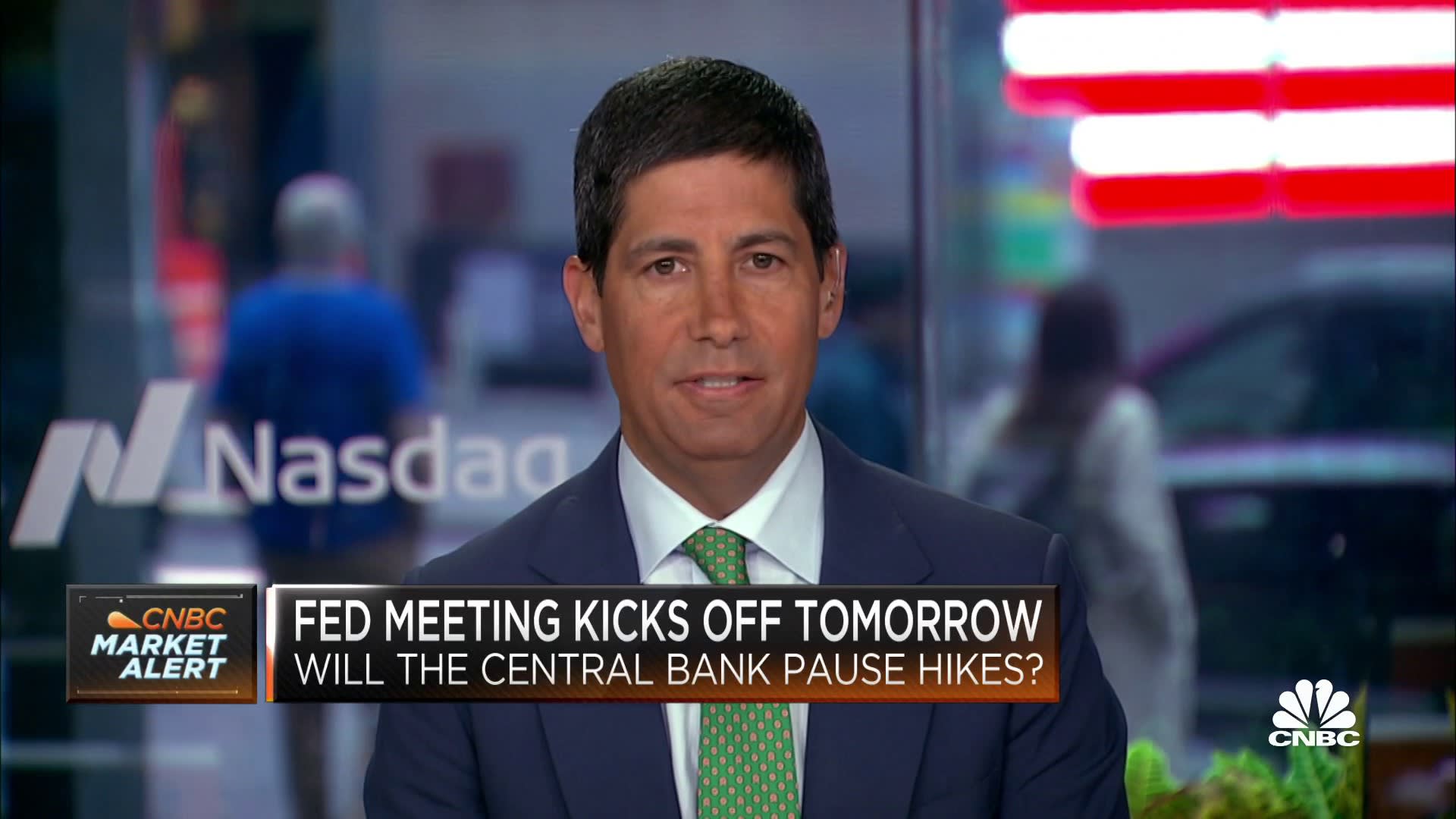
The investigation that nearly derailed Warsh's nomination was narrower in scope than its reputation suggested. Federal prosecutors in the District of Columbia had been examining cost overruns in the Fed's multibillion-dollar renovation of its Washington headquarters, a project that ran significantly over budget under Powell's watch. U.S. Attorney Jeanine Pirro, the top federal prosecutor in D.C., announced Friday that her office was abandoning the inquiry. No charges were ever filed, and no misconduct was formally established. The probe's legal weight was thin. Its political weight had been substantial.
Tillis had made the investigation his lever. He would not allow Warsh's nomination to advance until the probe was formally and publicly closed, arguing it was procedurally inappropriate to confirm a replacement while an active federal inquiry targeted the sitting chair. Critics of Tillis read harder political calculus: a desire to extract a public accounting before Powell departed on his own terms, and an opportunity to demonstrate to Trump allies that Republican moderates remained useful. With Pirro's announcement Friday, Tillis removed his hold and the Senate Banking Committee gained a clear lane.
A committee vote is now plausible within days. After committee approval, the nomination goes to the full Senate floor, where Majority Leader John Thune has the procedural tools to accelerate a vote if he chooses. Warsh's confirmation before Powell's May 15 deadline is tight but achievable. If the timeline slips past that date, Fed governor Philip Jefferson would serve as acting chair, a caretaker posture that markets would treat as temporary and uncontroversial. The real question is not whether Warsh gets confirmed but what he does the first time the rate decision is genuinely contested.
The Rate Environment Warsh Inherits
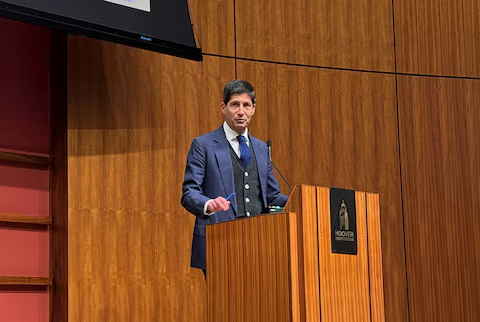
The Fed Powell chairs for the last time next week is one effectively immobilized by a triple supply shock. Governor Christopher Waller stated publicly in April that the Middle East war, which broke out in late February, has layered a third consecutive negative supply jolt onto an economy already absorbing elevated tariffs and tighter immigration policy. Brent crude surged more than 55 percent from the conflict's onset through mid-April. While the Strait of Hormuz has partially reopened and oil prices have retreated from their peaks, pass-through to consumer prices is not yet complete.
St. Louis Fed President Alberto Musalem told Reuters in an exclusive interview that the oil shock alone is sufficient to keep core inflation close to 3 percent through year-end, roughly a full percentage point above the Fed's 2 percent target. Rate markets have repriced accordingly. Investors now assign less than one full 25-basis-point cut's worth of probability to easing through December 2026, a sharp reversal from early February when two complete cuts were fully priced. The 10-year Treasury yield has risen approximately 40 basis points since late February, reflecting both the energy shock and the uncertainty around Fed leadership.
Warsh enters this environment with a stated thesis that resists easy hawk-or-dove categorization. At his Senate hearing on April 21, he argued that AI-driven productivity gains are structurally disinflationary, giving policymakers grounds to hold rates lower than the inflation data alone would justify. That framing put distance between him and Trump's crude rate-cut demands while preserving room for eventual easing. It drew approval from tech investors who have driven the S&P 500 up 11 percent in April on AI optimism. The thesis, though, is premised on a productivity payoff that has not yet appeared in any price index, and the oil shock has given inflation every reason to linger well into the second half.
How Wall Street Is Repositioning
Warsh's tenure at Morgan Stanley before his first appointment to the Fed board in 2006 has generated predictable optimism among large-bank investors. Financial sector stocks outperformed during the weeks following his nomination, pricing in the expectation that a Republican-aligned chair will ease the regulatory posture toward large banks that the Basel III endgame proposals had threatened. Under Vice-Chair for Supervision Michelle Bowman, already installed by Trump in a separate appointment, the supervisory tone has shifted away from the capital-ratio push. A Warsh chairmanship would cement that direction and likely accelerate the rollback.
The bond market's read is less sanguine. Fortune published a piece on April 25 quoting a former Powell adviser who described Warsh as lacking the institutional gravitas that Alan Greenspan accumulated over years: a pointed observation that raises questions about his ability to command credibility during the next major dislocation. Fed credibility is not ceremonial. It is the mechanism by which central banks compress the inflation risk premium embedded in long-term Treasury yields. When markets begin to price in a politically proximate chair, the term premium widens and long-end yields rise regardless of what the overnight policy rate does.
The Council on Foreign Relations' post-hearing analysis described Warsh's Senate performance as disciplined reassurance without binding commitment. He pledged independence repeatedly, said Trump had never demanded rate cuts from him directly, and declined to specify any future policy trajectory. The CFR noted that this performance was both appropriate for a confirmation hearing and structurally opaque: investors know what Warsh said, but not what he will do the first time a rate decision carries a genuine cost to the administration's political interests.
Downstream Pressure on Borrowers
The higher-for-longer environment Warsh inherits is already extracting costs across the real economy. The 30-year fixed mortgage rate has remained above 7 percent for most of 2026, a level that has suppressed existing-home sales to their lowest annual pace since 2012 as homeowners with 3-percent pandemic-era mortgages refuse to trade up into higher-rate debt. The National Association of Home Builders market index fell for the third consecutive month in April, and housing starts are running roughly 18 percent below their 2022 peak. Residential construction employment has contracted for four consecutive months, a leading indicator that housing's drag on GDP is not yet complete.
Corporate borrowers have largely adapted by front-loading issuance during brief windows when credit spreads tightened, but the refinancing pipeline is substantial. More than 1.4 trillion dollars in investment-grade and high-yield debt matures between now and the end of 2027. If the new chair holds rates above current market pricing, those maturities land at a materially higher refinancing cost, with the pressure concentrated in leveraged buyout-era debt from the 2021 vintage.
Small and regional banks face their own version of the problem. They carry large unrealized losses on fixed-income portfolios accumulated during the 2020 and 2021 low-yield period. Those losses are manageable while deposit flows remain stable, but they become acute if depositors seek better yields elsewhere. A Fed that holds rates elevated provides no relief for that underwater book and extends the period during which those institutions must manage around unrealized losses rather than deploying capital into new lending. Warsh's expected regulatory ease at the margins does not resolve the fundamental balance-sheet arithmetic.
The Independence Question the Markets Will Keep Asking
Warsh's Senate performance was disciplined. He used variations of "strictly independent" and "stay in its lane" throughout the April 21 hearing, declined to commit to any specific rate path, and told CBS News that the Federal Reserve would remain independent under his leadership. NPR characterized his testimony as a credible effort to establish separation from the president's rate preferences. No Democrats on the committee were persuaded, but their votes are not needed; Republicans hold the margin.
The concern that persists is structural rather than personal. Presidential influence on central bank behavior rarely works through direct demands. It works through appointments over time, through public signaling, through the gradual composition of the FOMC's board of governors. Trump has already filled multiple board seats. He will have additional governor vacancies over the next two years. A chair who described his temperamental preference as responding to current conditions rather than being "too forward-looking," the phrase Warsh used in his hearing, is a chair whose default posture happens to align with what any sitting administration wants when growth softens and an election cycle approaches.
The international dimension is significant. The IMF cut its 2026 UK growth forecast to 0.8 percent this month, down from 1.3 percent in January, the largest downward revision among the G7. It cut its eurozone forecast to 1.1 percent and warned that a "major energy crisis" remains plausible if Middle East tensions persist. Both revisions were made against a background assumption of Fed policy stability. If that assumption weakens, dollar dynamics, global risk appetite, and the cost of dollar-denominated sovereign debt shift in ways that compound the IMF's already-downgraded projections.
The confirmation vote, when it arrives, will be swift. The DOJ decision removed the last Republican holdout. Warsh will be confirmed, and he will inherit a chair that sits at the intersection of war-driven inflation, an AI productivity dividend not yet visible in price data, and the most consequential central bank transition in a generation. Powell inherited full employment, inflation near target, and room for patience. He leaves his successor an economy in which core inflation stubbornly tracks near 3 percent, a global energy shock is only partially resolved, and the institutional credibility of the Federal Reserve itself is the one asset that must not be spent carelessly. The confirmation is the easy part. The bond market will settle the harder questions.